•
•
•
•
•
•
•
•
•
•
•
•
•
•
•
•
•
•
•
•
•
•
•
•
•
•
•
•
•
•
•
•
•


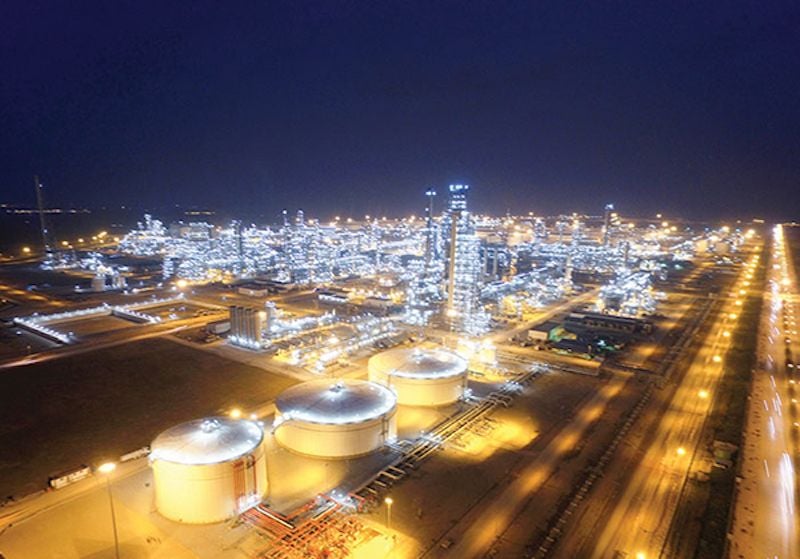
Vietnam’s Nghi Son Refinery and Petrochemical Complex is one of the country’s largest heavy-industry projects. As global emission standards tighten and energy systems shift toward greener sources, the complex faces two core priorities: maintaining national energy security and minimizing environmental impact.
The project applies international environmental and quality management practices suited to its high-complexity industrial operations. It uses an integrated management system under ISO 9001:2015 for quality management and ISO 14001:2015 for environmental management, certified by DNV-GL. The standards are designed to help control production quality, reduce operational risk, and limit ecological impact.
The complex also holds the required licenses covering effluent discharge, seawater use, hazardous waste management, and oil-spill response planning.
Within the refinery complex, highly automated systems operate around the clock, including distillation towers, reactors, and catalytic processing units. After crude oil is imported, it undergoes multiple processing stages to produce products used in transportation, manufacturing, and consumer markets.
As of 2025, the complex had logged more than 20 million hours of safe operation without a lost-time accident.
Nghi Son is a joint venture among major Vietnamese, Japanese, and Kuwaiti groups, with total investment of around USD 9 billion. The facility is among Vietnam’s largest refining complexes, with design capacity of about 200,000 barrels of crude oil per day, equivalent to nearly 10 million tons per year.
The plant primarily processes crude oil imported from Kuwait, along with other feedstocks, to produce gasoline, diesel, aviation fuel, LPG, and a range of petrochemical products for industry. Under normal conditions, Nghi Son can meet about 35% of domestic gasoline and fuel demand, reducing reliance on imported fuels.
According to 2026 plans, the company expects to supply about 2 million tons of gasoline and diesel to the market in Q1. For the full year, the complex is expected to import nearly 12.5 million tons of crude oil and supply about 9 million tons of products.
To address pressure on fuel supply, the company also plans to diversify crude oil sources and adjust the production mix, prioritizing gasoline and diesel for the domestic market.
Beyond energy security, the Nghi Son project supports economic development in Thanh Hoa and Vietnam’s North Central region. Construction and operation have created thousands of jobs and helped spur infrastructure, logistics, services, and supporting industries around the Nghi Son Economic Zone.
The project also supports technology transfer and training of high-quality human resources for the oil and petrochemical sector, which requires modern technical expertise.
In the context of the global energy transition, refining and petrochemical complexes like Nghi Son face challenges related to emissions, technology, and competition. Even so, the complex remains a major energy hub, described as a “heart of industry” supporting ongoing production and livelihoods.
Premium gym chains are entering a “golden era” that is ending or already in decline, as rising operating costs collide with shifting consumer preferences toward more flexible, community-based ways to exercise. Long-term memberships are shrinking, margins are pressured by higher rents and facility expenses, and competition from smaller, more personalized…