•
•
•
•
•
•
•
•
•
•
•
•
•
•
•
•
•
•
•
•
•
•
•
•
•
•
•
•
•
•
•
•
•


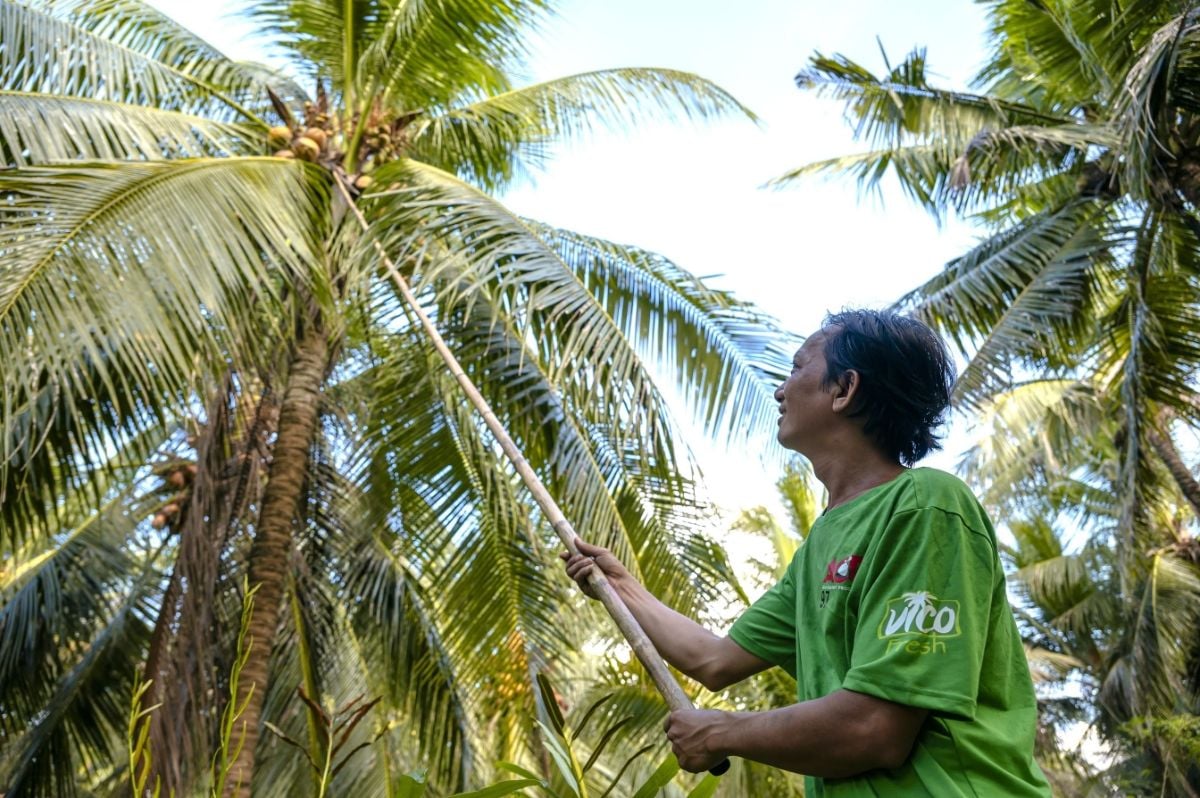
Vĩnh Long is working to turn the coconut industry into a USD 1 billion export sector by developing organic raw-material zones and expanding modern deep-processing projects to raise the value of agricultural products and strengthen integration into global supply chains.
With a large raw-material base and a strategy centered on green, circular agriculture, Vĩnh Long aims to expand organic coconut cultivation, strengthen supply-chain linkages, and attract investment in modern deep-processing plants. The province’s 2030 development plan focuses on shifting agriculture toward green, ecological and circular models, with coconut identified as a key product group.
Local data indicate positive growth in the raw-material region. As of 2025, the province’s coconut cultivation area reached 119,270 hectares, with an average annual growth rate of 2% from 2020.
With a push for clean agriculture, coconut yield reached 11.95 tonnes per hectare—1.1 times the Mekong Delta and national average. Total production in 2025 is expected at about 1.316 million tonnes.
Organic-certified coconuts meeting international standards (including USDA, EU and JAS) have expanded to over 30,300 hectares, representing nearly 26% of the total cultivation area, which the province says provides a foundation for exports.
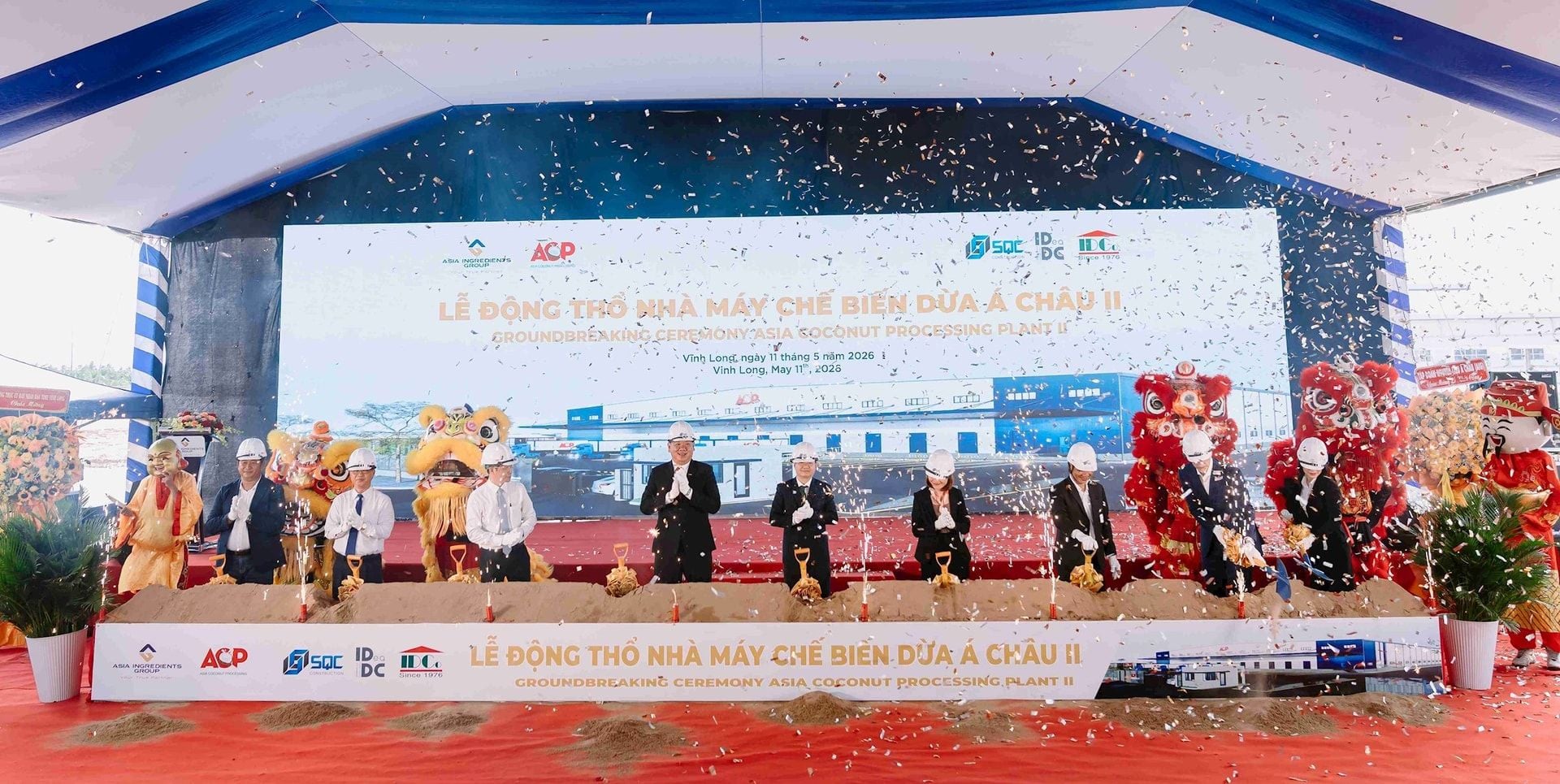
On May 11, 2026, Asia Ingredient Group (AIG) held a groundbreaking ceremony for the Asia Coconut Processing Plant II (ACP2) at the Long Phu Industrial Cluster in Vĩnh Long.
The project has total investment of nearly VND 630 billion on an area of 60,000 m2. It is expected to begin operations in Q1 2027 and is positioned as a key step to stabilize the raw-material supply chain, apply advanced technology, and support deeper participation in global supply chains.
AIG has built an ecosystem of subsidiary companies operating multiple deep-processing plants across major raw-material regions nationwide. The company’s processed agricultural products are exported to more than 50 countries and territories, including the United States, Europe and Japan, as well as Korea and potential Halal markets in the Middle East.
Vice Chairman Nguyễn Trúc Sơn said the company’s continued expansion reflects a transparent business environment. He added that completion by early 2027 would be a major boost to increasing the value of processing and coconut exports, while the province’s 2030 target includes expanding the cultivated area to 132,000 hectares and reaching export turnover of USD 1 billion.
Nguyễn Bảo Tùng, CEO of AIG, described ACP2 as a next step in leveraging the region’s “coconut capital” to support modern and sustainable development of the coconut industry. He said the plant will use European-made production lines and equipment and meet strict international quality standards, with the aim of building ACP into a large-scale coconut-processing company in Vietnam.
ACP2 is designed for green operations. With guidance from the International Finance Corporation (IFC) under the Agriconnect initiative, the plant is built to ESG standards, including tight emissions reporting and a commitment to sustainable development.
Pham Hoang Van, Project Lead at the IFC, said sustainable development is now a core element of corporate competitiveness. He added that ACP2 is expected to contribute to Vietnam’s green transformation in agriculture and agricultural product processing.

Premium gym chains are entering a “golden era” that is ending or already in decline, as rising operating costs collide with shifting consumer preferences toward more flexible, community-based ways to exercise. Long-term memberships are shrinking, margins are pressured by higher rents and facility expenses, and competition from smaller, more personalized…