UBS says the Federal Reserve may be moving away from the era of telegraphing policy moves to financial markets, warning that a shift in approach under a potential new chair could have wide implications for bonds, gold and the broader global economy.
UBS now expects Kevin Warsh to be sworn in as chair of the Federal Reserve in time for the June meeting of the rate-setting Federal Open Market Committee (FOMC).
UBS characterises Warsh’s approach as a sharp break from the gradualist tradition established by his predecessors, arguing the change could affect how markets price interest rates and risk.
In contrast, UBS points to Ben Bernanke’s leadership during the 2008 financial crisis, when the Fed relied on two widely associated tools: forward guidance—signalling in advance where interest rates are heading—and quantitative easing (QE), the mass purchase of bonds to lower long-term borrowing costs.
Under the logic of gradualism, predictable incremental rate moves were intended to give the Fed greater influence over long-term interest rates, which then feed into mortgage costs, corporate borrowing and economic activity.
UBS says Warsh does not believe in forward guidance. He has argued that publishing rate forecasts compounded the Fed’s inflation mistake in 2021 and 2022, because the Fed effectively told markets what it would do before it did it, limiting its room to manoeuvre.
UBS says Warsh’s preferred approach resembles what Bernanke described as a “cold turkey strategy”: the FOMC meets, makes its best judgement on rates, and moves in a single step rather than signalling months in advance.
UBS adds that Warsh also declined to offer rate guidance during his confirmation hearings, stating that the Fed must make decisions “in the room.”
UBS says the shift could be difficult for investors to trade. The investment bank had expected Warsh to lean slightly more dovish on the policy outlook, but it was “stopped out” of a rates trade positioned for more aggressive easing in 2027.
For bond markets, UBS expects flattening pressure to build in the gap between five-year and thirty-year US Treasury yields, a segment of the curve known as the 5s30s spread.
UBS notes that steepeners—trades that profit from the gap widening—tend to work when a dovish central bank cuts rates gradually. It suggests that this may no longer be the appropriate framework.
The bank also flags that higher policy rate expectations or term premia—an additional return investors demand for holding longer-dated bonds—would act as a disinflationary force on the US economy.
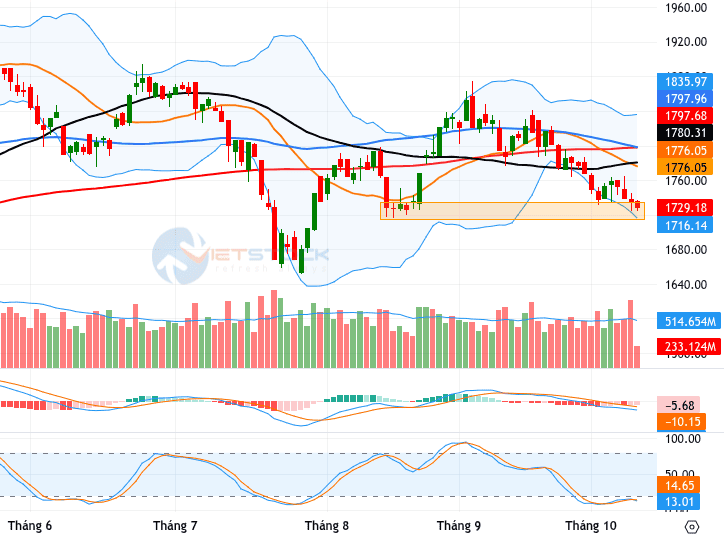
Since President Trump named Warsh as his pick for Fed chair at the end of January, UBS says gold prices have fallen approximately 14%. UBS interprets the move as consistent with markets pricing in a tighter and less predictable monetary environment.
On the Fed’s balance sheet, which UBS says swelled to nearly $9 trillion during successive rounds of QE, UBS expects any reduction to be slow and methodical.
UBS forecasts reserve management purchases of $25 billion a month to year-end, rising to around $40 billion a month in 2027 and $50 billion in 2028.
UBS concludes that four decades of increasingly transparent and predictable central banking may be giving way to a more discretionary, more reactive approach—one that it says could be considerably harder to trade around.