•
•
•
•
•
•
•
•
•
•
•
•
•
•
•
•
•
•
•
•
•
•
•
•
•
•
•
•
•
•
•
•
•


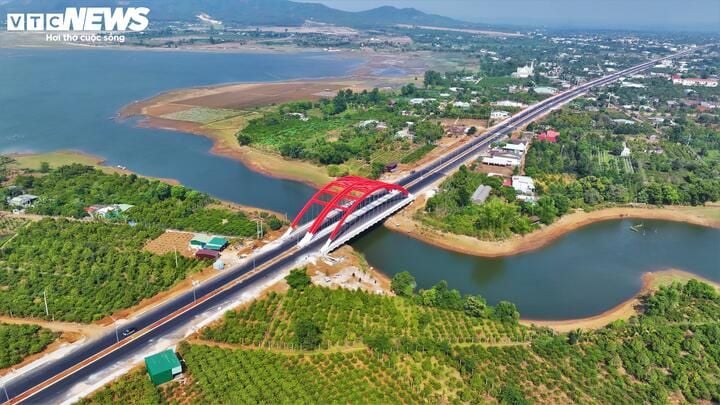
According to PV Bao Dien tu VTC News, the project to connect National Highway 19 with Ho Chi Minh Highway (the Pleiku bypass) has been completed and is expected to reshape the economic and social outlook for the basalt-red region.
The Gia Lai bypass road project linking National Highway 19 to the Ho Chi Minh Highway is a key investment with a total investment of about 1.2 trillion VND. The project is managed by the Gia Lai Province’s Investment Projects Management Board.
The full route runs about 15 km, passing through Dak Doa commune, An Phú ward, and Bien Ho. The road is expected to promote development in the western part of Gia Lai.
The road is designed to Grade III plain standards, with a design speed of 60 km/h. The foundation width is 30 m, and the road surface width is 21 m (including drainage). The median is 3 m wide, with sidewalks on both sides of 3 m.
The road surface is paved with high-quality asphalt and is designed to bear trucks with loads of 10 tons per axle.
A highlight of the route is the river-crossing bridges over the Bien Ho river, which connect through the central core tourism area of Bien Ho and the Chu Dang Ya volcano (Bien Ho commune). Bien Ho Bridge is currently the largest arch-structure bridge in Gia Lai’s western area.
With the bridge completion, the need to detour around the lake is reduced and the distance between National Highway 19 and the Ho Chi Minh Highway is shortened.
At present, the system of roundabouts, medians, signage, and lighting on the entire route has been completed. The project’s management board states that the technical works for the entire route have been officially handed over.
Instead of taking nearly 45 minutes to weave through city intersections, drivers will now take about 15 minutes, saving fuel.
Tourists can also reach destinations such as Bien Ho and the Chu Dang Ya volcanic site more easily without passing through downtown Pleiku.
From a high vantage point, the route is described as a “plastic belt” across the coffee hills. It is expected to function as a strategic artery to ease congestion and create new development space for Pleiku and western Gia Lai.
Premium gym chains are entering a “golden era” that is ending or already in decline, as rising operating costs collide with shifting consumer preferences toward more flexible, community-based ways to exercise. Long-term memberships are shrinking, margins are pressured by higher rents and facility expenses, and competition from smaller, more personalized…