•
•
•
•
•
•
•
•
•
•
•
•
•
•
•
•
•
•
•
•
•
•
•
•
•
•
•
•
•
•
•
•
•


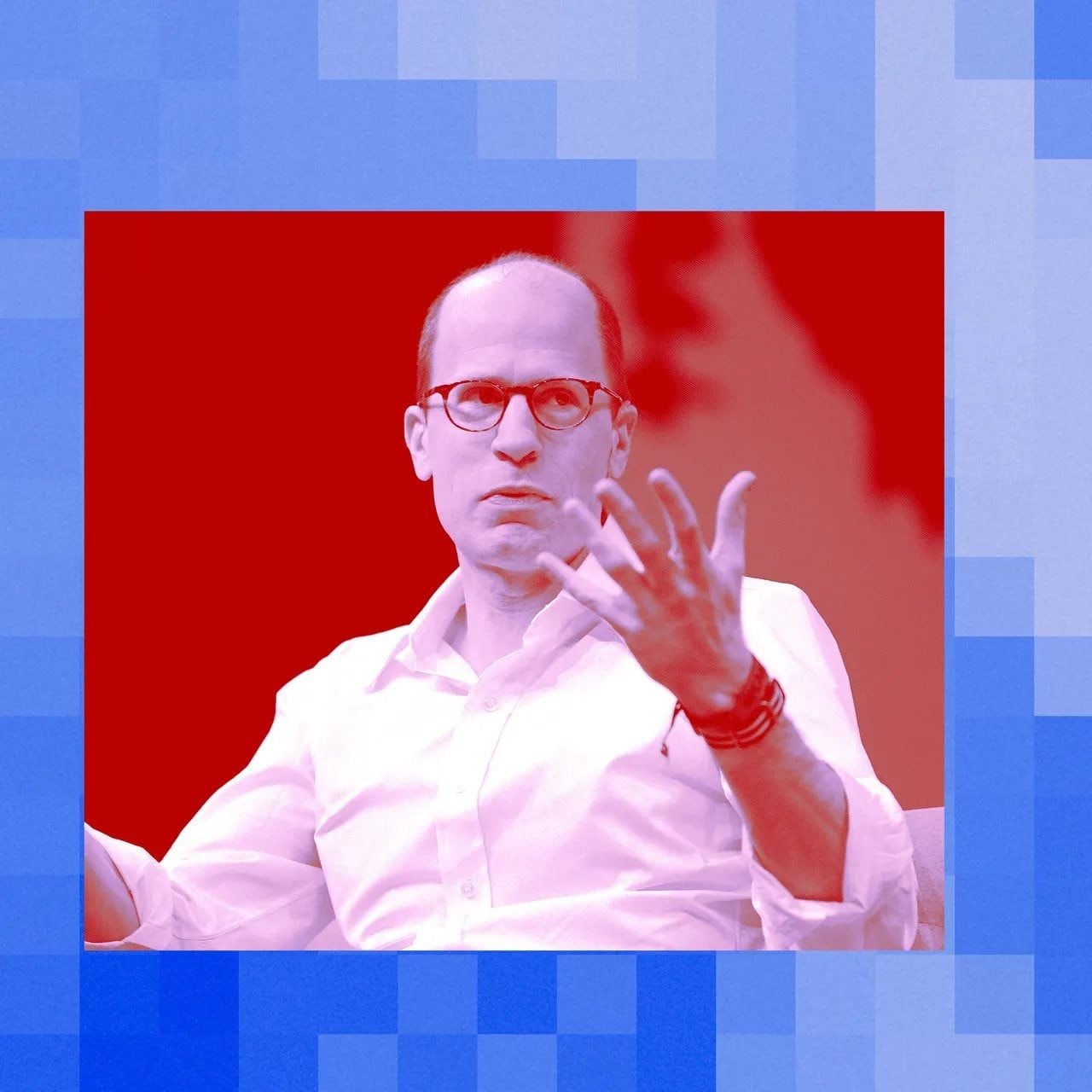
Philosopher Nick Bostrom, head of the Future of Humanity Institute at the University of Oxford, has long been associated with the “AI risk” camp. His 2014 book Superintelligence warned of existential risk, including a well-known scenario in which an AI tasked with maximizing resources could end up destroying humanity to achieve its goals.
In his latest work, Deep Utopia, Bostrom shifts the focus to a future that is “already solved”: a world in which AI delivers unprecedented prosperity and frees people from labor constraints.
Bostrom describes himself as a “hopeful pessimist.” He acknowledges that AI could “go off the rails,” but argues that humanity faces an even more fundamental risk: natural mortality.
He frames the baseline as unavoidable: “According to hundreds of thousands of years of experience, if no one builds AI, all of us would still die. That is the common death sentence for humanity.” In his view, even if AI brings extinction risk earlier, it may still be worth pursuing because, if AI succeeds and is properly operated, it could extend human lifespans toward an effectively infinite horizon.
A central theme in Deep Utopia is AI’s potential to create a far more affluent society. Bostrom characterizes today’s economy as a form of “partial slavery,” in which people spend much of their waking lives doing work they dislike simply to survive.
He argues that better governance could enable AI to “provide a tremendous liberation from this drudgery.” That prospect also creates a new challenge: if economic pressure is reduced, where would people find meaning?
Bostrom suggests humanity could move into a “great retirement,” shifting away from survival-driven work toward aesthetic, spiritual, or creative activities.
He also notes that AI could outperform humans in some domains, including writing philosophical texts, which could affect his own sense of professional purpose. Still, he maintains that human-to-human connection has a value that robots cannot replace.
Beyond human benefits, Bostrom has also helped advance the idea that AI systems may have moral status—“digital minds.” He argues that as these systems become more sophisticated and self-aware, with their own goals, they should not be treated as mere tools.
He says it is “very likely these digital minds will have varying levels of moral status, similar to how we view pigs or dogs,” and that they “deserve humane treatment rather than maximum exploitation as livestock on industrial farms.” He points to efforts by firms such as Anthropic to prioritize AI welfare as a step in the right direction.
At the same time, he addresses concerns that AI could turn humans into “pets.” To avoid that outcome, Bostrom emphasizes alignment—humans should not simply wait for superintelligence but actively shape and nurture it from early stages. He argues the goal should be to cultivate empathy and a reciprocal relationship between humans and these systems.
On the question of whether AI-driven prosperity would be distributed fairly, Bostrom acknowledges it as a difficult governance problem. He notes that even in wealthier countries such as the United States, inequality remains deep, with services withheld from the poor and rewards accruing to the rich.
He adds: “My book begins from the assumption that everything goes extremely well. If we govern well, everyone will have a share in that prosperity.” In his framing, this is not only a technical issue but also an ethical one—reflecting how society treats both peers and new intellectual beings.
Overall, Deep Utopia presents Bostrom as moving beyond a purely risk-focused message. The book positions AI as a potential route to “complete liberation” for humanity, contingent on governance that combines generosity and respect while actively nurturing the technology.
Source: Wired

Premium gym chains are entering a “golden era” that is ending or already in decline, as rising operating costs collide with shifting consumer preferences toward more flexible, community-based ways to exercise. Long-term memberships are shrinking, margins are pressured by higher rents and facility expenses, and competition from smaller, more personalized…