•
•
•
•
•
•
•
•
•
•
•
•
•
•
•
•
•
•
•
•
•
•
•
•
•
•
•
•
•
•
•
•
•


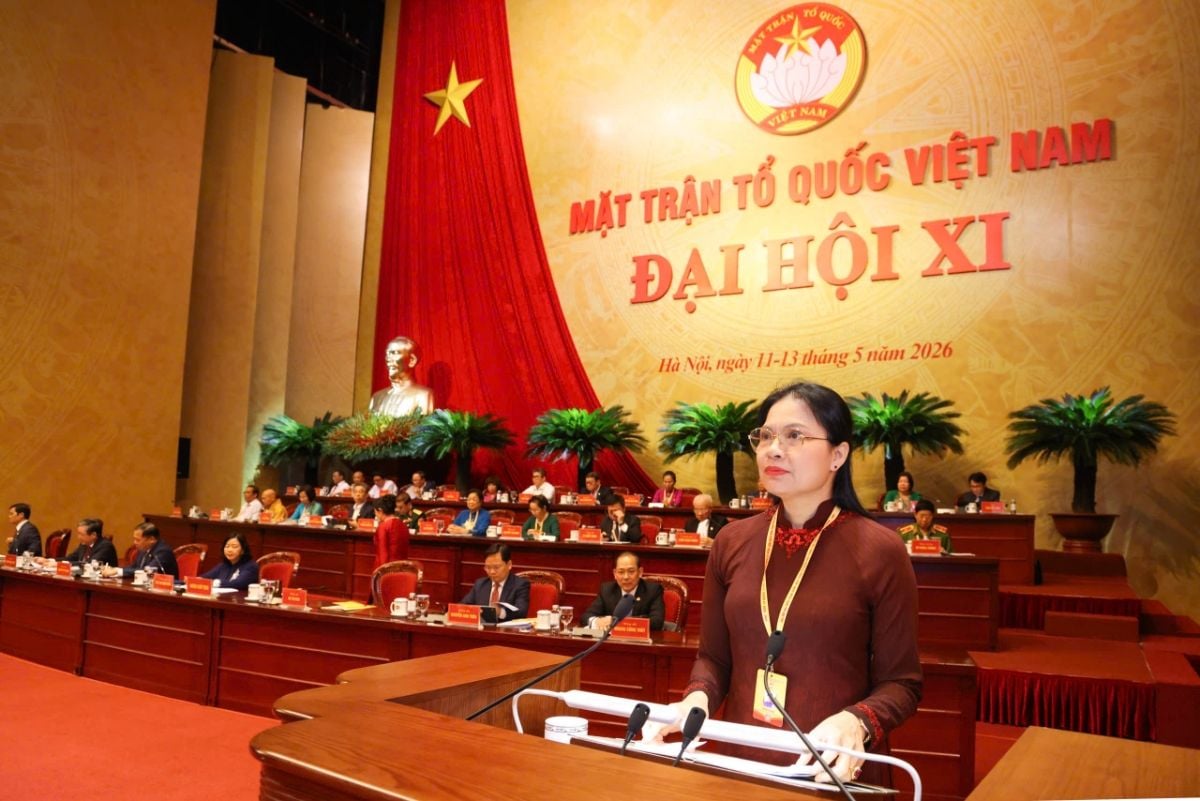
According to Ms. Ha Thi Nga, a member of the Party Central Committee and Vice Chairwoman–General Secretary of the Vietnam Fatherland Front Central Committee, the Standing Committee for the 2024–2026 term continued to reform its content and operating methods, completing tasks identified in the Congress Resolution and addressing practical issues in a timely, high-quality and effective manner.
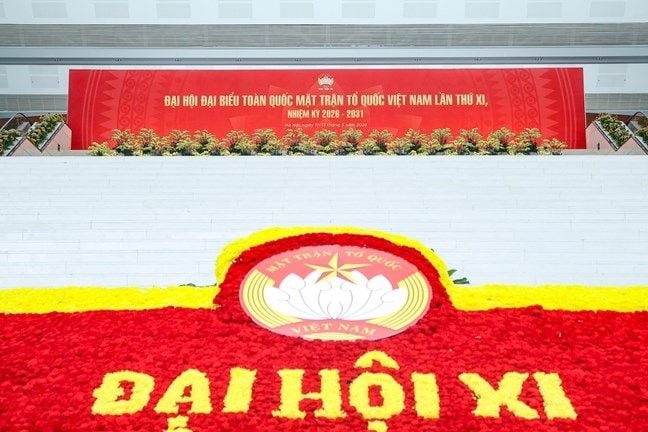
On the afternoon of May 11, at the provisional session of the 11th National Congress of the Vietnam Fatherland Front for the 2026–2031 term, Ms. Ha Thi Nga presented a summary report on the performance evaluation of the Central Committee, the Presidium and the Standing Commission of the Central Committee for 2024–2026.
She noted that the XI National Congress for 2026–2031 will take place shortly after the success of the Party’s XIV National Congress and the election of deputies to the 16th National Assembly and the People’s Councils for the 2026–2031 term, after more than a year of implementing the 10th Congress Resolution and nearly a year of operating under the new organizational model.
In the 2024–2026 period, the Standing Committee renewed content and operating methods to deliver timely, high-quality and effective results for tasks defined in the Party’s Resolution and practical realities.
Ms. Ha Thi Nga said the Central Committee issued a full-term work program and regulations; held seven conferences to discuss, decide and approve major policy directions of the Front’s system; and standardized the execution of key tasks and personnel work through resolutions.
The Committee also focused on consolidating and improving the quality of operations, including implementing the Party and State policy on reorganizing and streamlining the organizational apparatus and implementing two-tier local government.
Under its authority, the Presidium organized 10 conferences: three on the election of deputies to the 16th National Assembly and seven to review and decide on items submitted for consideration.
Ms. Ha Thi Nga also highlighted the Presidium’s proactive role in lawmaking, particularly in drafting and soliciting public input on amendments to the 2013 Constitution. She said the Presidium chaired the drafting of amendments to the Law on the Vietnam Fatherland Front, the Labour Law, the Youth Law and the Law on Democracy at the grassroots level.
The Presidium, she added, coordinated with the National Assembly’s Standing Committee, the Government and relevant agencies to implement election work for deputies to the National Assembly and the People’s Councils at all levels according to its authority.
“The Presidium has introduced many innovations, raised the quality of synthesis and reflection of voters’ and citizens’ opinions; launched campaigns to mobilize support for the poor and those affected by natural disasters,” Ms. Ha Thi Nga emphasized.
She said the results were supported by ongoing attention from the Politburo, the Secretariat and authorities at all levels, along with proactive coordination by the National Assembly, the Government and local governments, collaborative action among member organizations, and contributions and responsibilities of Central Committee members, Presidium members and the Advisory Council.
Ms. Ha Thi Nga said that despite the outcomes, the Front identified shortcomings to be addressed. She noted that propaganda, mobilization and mobilizing the people have not fully met practical demands. In some areas, participation in lawmaking, oversight and social criticism remains awkward and of insufficient quality. She also said pushing and monitoring the implementation of policies on rearranging and streamlining the apparatus has not consistently met quality and timeline requirements.
From the 2024–2026 results, she underscored key lessons: staying close to Party leadership, State policy and Congress resolutions; ensuring unity among the Central Committee, the Presidium and the Standing Committee, with political steadfastness and practical Front experience.
She further said Front activities must remain closely connected to public sentiment, aspirations and legitimate demands of the people, internalizing the principle that “People are the root,” with the people as the subject and center of reform, nation-building and defense.
Ms. Ha Thi Nga also called for strengthening cooperation with State agencies to ensure effective operating mechanisms, intensifying consultation, coordination and unified action with member organizations, and promoting the roles and responsibilities of member organizations while truly innovating in thought and action to meet the country’s development needs in the new era.




Premium gym chains are entering a “golden era” that is ending or already in decline, as rising operating costs collide with shifting consumer preferences toward more flexible, community-based ways to exercise. Long-term memberships are shrinking, margins are pressured by higher rents and facility expenses, and competition from smaller, more personalized…



