•
•
•
•
•
•
•
•
•
•
•
•
•
•
•
•
•
•
•
•
•
•
•
•
•
•
•
•
•
•
•
•
•


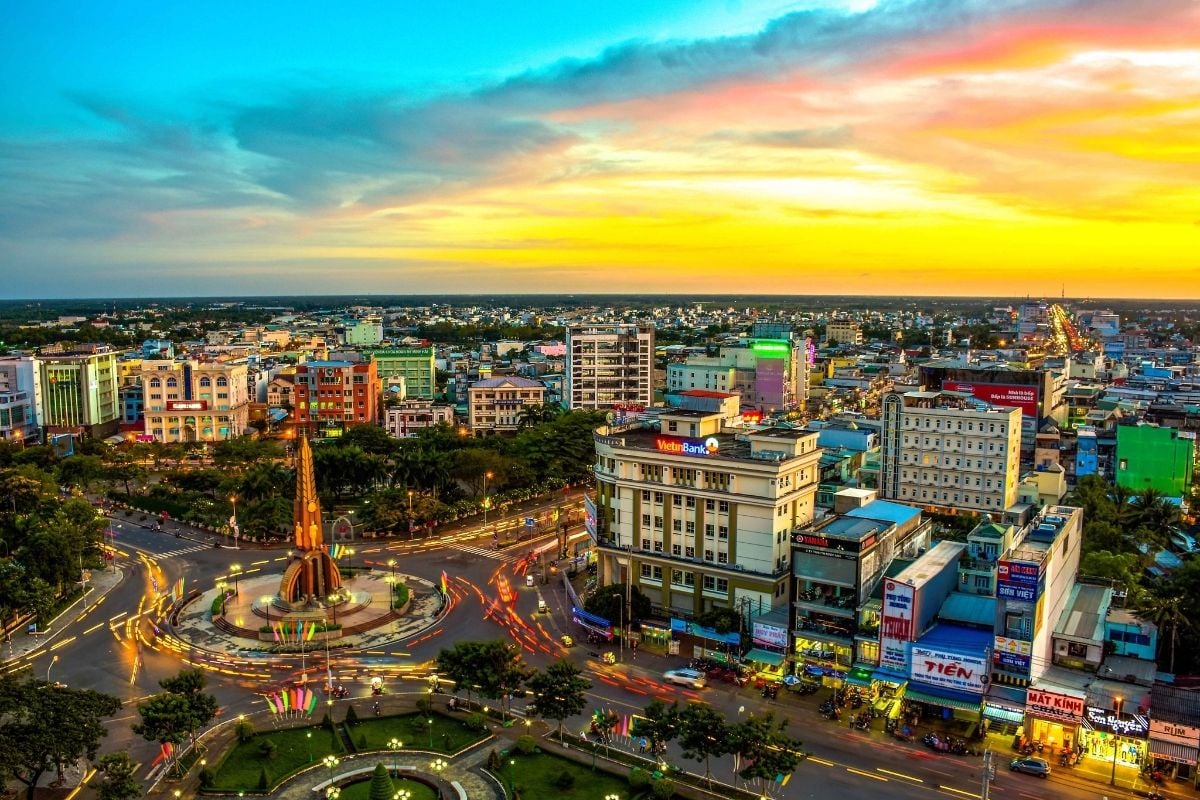
Ca Mau Province plans to invest more than 65.6 trillion dong in transport infrastructure development for the 2026-2030 period, aiming to gradually complete its transport network and strengthen connectivity with neighboring localities in the region.
The province said it will prioritize upgrading and improving the existing transport system, citing limitations on several routes such as narrow road widths and low load capacity. It also noted that some sections frequently flood due to tidal effects, which hampers freight transport, raises logistics costs, and affects connectivity within Ca Mau and with nearby areas.
From 2026 to 2030, Ca Mau expects to prioritize 18 major transport projects that have been approved or are finalizing policy procedures. The total investment for this group is about 28.7 trillion dong, sourced from central and local budgets and ODA loans.
Among the priority projects, the coastal road running through the province has the largest scale, with total investment of over 8.482 trillion dong. The project is financed by a loan from the Korea Eximbank and forms part of the Mekong Delta coastal transport axis.
Another interregional project is the coastal road segment through Bac Lieu Province (formerly) and its connection to the Nam Song Hau route, with total investment of over 3.766 trillion dong, funded by a loan from the Asian Development Bank (ADB).
Ca Mau also plans additional key transport infrastructure projects, including:
Under the plan, the projects are expected to complete appraisal in Q2 2026, begin construction in Q4 2026, and come into operation by Q4 2030.
In addition to projects already approved or under investment, Ca Mau lists new proposed projects with total investment demand of about 36.881 trillion dong. The province highlighted the road connecting Ca Mau City and Bac Lieu City—about 55 km long—requiring 25.5 trillion dong and expected to become a major transport axis to promote trade and improve connectivity between the two urban centers.
The proposed list also includes remaining sections of the coastal road with total capital of about 8.545 trillion dong, upgrades to provincial roads DT.981 and DT.985, and construction of the Sông Trẹm Bridge.
Ca Mau also plans to mobilize about 120 billion dong from privatization/private funding to invest in building bus terminals of type 3 and type 4 in key areas including Đất Mũi, Sông Đốc and Gành Hào.
According to the Ca Mau Provincial People’s Committee, the new proposed projects will complete approval procedures in 2026, begin construction in 2027, and aim to complete by the end of 2030.
Earlier, Ca Mau started and is implementing three major projects with total investment of about 100 trillion dong, expected to be completed by the end of 2028.
The Ca Mau – Dat Mui Expressway project is over 80 km long, with total investment of nearly 60 trillion dong. Complementing the expressway are two projects: the road to Hon Khoai Island (linking the mainland to Hon Khoai Port) with investment over 25 trillion dong, and the Hon Khoai multipurpose port with investment over 15 trillion dong.





Premium gym chains are entering a “golden era” that is ending or already in decline, as rising operating costs collide with shifting consumer preferences toward more flexible, community-based ways to exercise. Long-term memberships are shrinking, margins are pressured by higher rents and facility expenses, and competition from smaller, more personalized…




