•
•
•
•
•
•
•
•
•
•
•
•
•
•
•
•
•
•
•
•
•
•
•
•
•
•
•
•
•
•
•
•
•


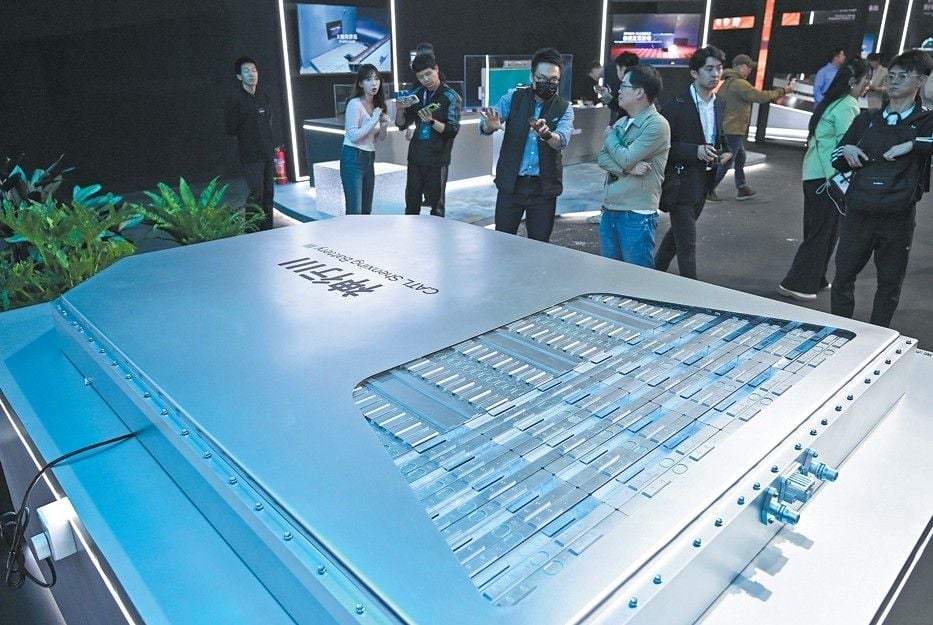
Contemporary Amperex Technology Co Ltd (CATL), the world’s largest electric-vehicle battery producer, said on April 22 that its sodium-ion battery lines will enter mass production this year, a key step toward lower-cost and more sustainable energy storage solutions.
Speaking at a press conference, Wu Kai, CATL’s chief scientist, said bottlenecks in the production process for sodium-ion batteries have been removed, paving the way for commercialization of the technology, which has long been viewed as a supplementary option to lithium-ion.
“Sodium-ion batteries are ready for large-scale production,” Wu said, adding that the technology could play a supplementary role, or even replace lithium-based systems in certain applications.
CATL is also accelerating development of new-generation high-performance battery technologies. Gao Huan, CATL’s chief scientist, said the company is negotiating with several Chinese premium carmakers on condensed-state (solid-state) battery technology, a branch related to solid-state batteries, and that prototype development is progressing smoothly.
First introduced in 2023 for aviation, CATL’s condensed-state battery has achieved energy density of up to 500 Wh/kg. The technology has completed its first flight test on a 4-ton class commercial aircraft, and is expected to continue verification on larger platforms, around 8 tons.
CATL’s plan is to adapt the aviation-grade technology for passenger vehicles. Under the plan, the condensed-state Qilin battery could reach 350 Wh/kg at the cell level, aimed at extending EV range while improving safety.
CATL’s move comes as concerns grow about lithium supply and geopolitical competition around the metal, a cornerstone of the global EV boom.
Experts said CATL’s roadmap indicates the race for battery-chemistry technology is entering a new phase as automakers and governments seek technological advantages and strengthen supply-chain resilience during the electrification transition.
Sodium-ion batteries use sodium, which is abundant in seawater and the Earth’s crust, replacing lithium, which is scarcer and concentrated in a few countries. However, in the near term, sodium-ion cannot fully replace lithium-ion, particularly in high-performance vehicles that require high energy density.
China has identified sodium-ion as a strategic priority and is promoting development of next-generation energy storage solutions, including sodium-based systems.
Hu Yongsheng, a researcher at the Institute of Physics of the Chinese Academy of Sciences, said sodium provides a safe and scalable resource base and plays an important role as a hedge to ensure energy security. He added that sodium-ion has potential in low-cost EVs, grid storage, and applications in cold environments where cost and stability advantages are more pronounced.
Hu also noted that sodium-ion production lines have high compatibility with lithium-ion, allowing manufacturers to flexibly shift or diversify output with limited adjustment costs, which could accelerate commercialization.
In the increasingly competitive battery-technology race, CATL’s announcement signals a shift for the energy-storage industry from dependence on a single material toward diversification of technology. The emergence of sodium-ion at commercial scale, alongside high-performance next-generation batteries, is expected to influence global supply chains and create more room for EV market development in the coming period.






Premium gym chains are entering a “golden era” that is ending or already in decline, as rising operating costs collide with shifting consumer preferences toward more flexible, community-based ways to exercise. Long-term memberships are shrinking, margins are pressured by higher rents and facility expenses, and competition from smaller, more personalized…