•
•
•
•
•
•
•
•
•
•
•
•
•
•
•
•
•
•
•
•
•
•
•
•
•
•
•
•
•
•
•
•
•


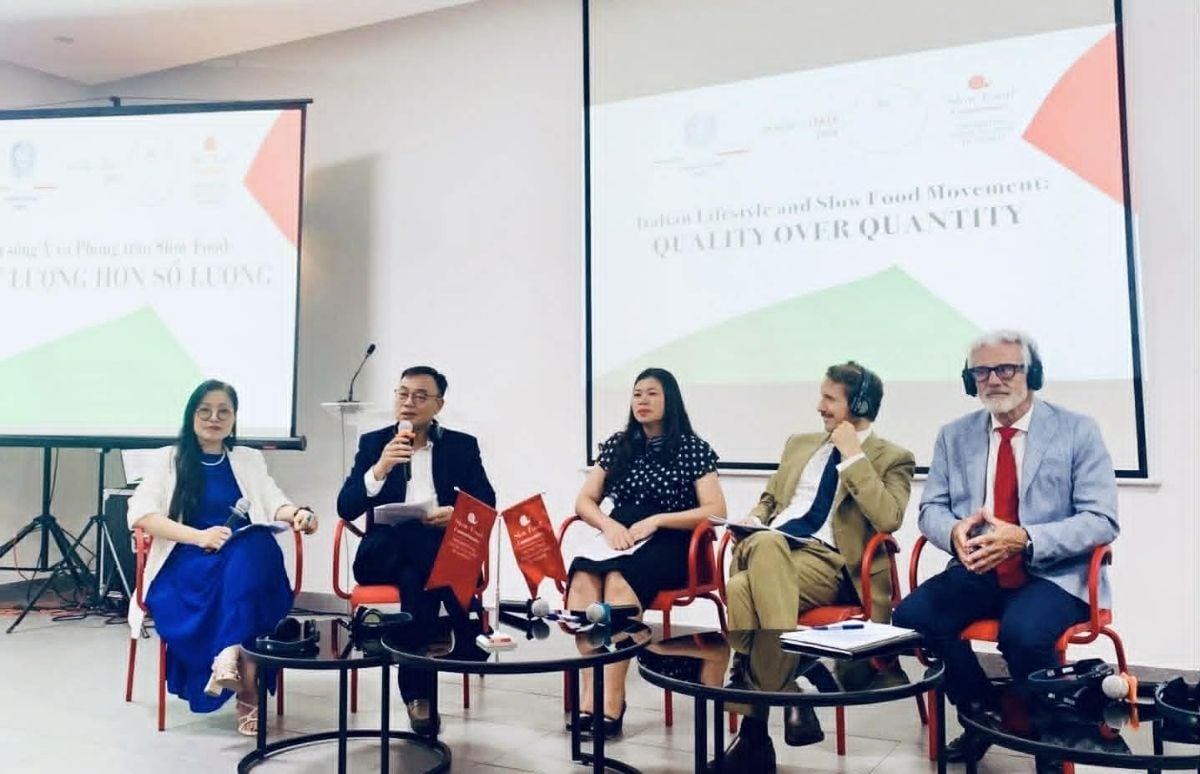
Against the backdrop of a fast-growing global pace of food production and consumption, a growing number of countries are emphasizing a philosophy of prioritizing quality over quantity. This theme was highlighted at the conference “Italy’s Lifestyle and the Slow Food movement: Quality over Quantity,” organized by the Italian Embassy in Vietnam on Made in Italy Day 2026.
Conference speakers framed the event as more than a cultural-food discussion, presenting it as a perspective on the future of the global food system. They pointed to traceability, social responsibility, environmental protection, and local identity as increasingly central criteria.
In his opening remarks, Marco Della Seta said quality, transparency, and accountability are no longer optional features but foundational elements for shaping the future of the world’s food sector. He also noted that Italy and Vietnam share a common advantage: long-standing agriculture closely linked with culture, technology, and community life.
The Slow Food philosophy, which originated in Italy about 40 years ago, is based on the principle “good, clean and fair,” meaning food should be not only delicious but also environmentally friendly and fair to producers and local communities. After five years in Vietnam, the movement has shown “strong compatibility” with local culture and daily life, drawing on foundations such as traditional craft villages, OCOP products, organic farming, and green consumption trends.
Dr. Pham Ngoc Mau, Deputy Director of the International Cooperation Department at the Ministry of Agriculture and Environment, said the values promoted by Slow Food align with Vietnam’s current agricultural development direction. He highlighted Vietnam’s system of local products and multiple production models connected to indigenous knowledge and community livelihoods, describing these as key foundations for promoting sustainable agricultural models, increasing the value of foods, and preserving traditional culinary culture.
Dr. Mau expressed confidence that Vietnam and Italy will continue expanding cooperation in processing, technology innovation, value chain development, and efforts to build a more responsible food system.
A notable outcome of the movement in Vietnam is the Slow Food Hanoi Community, established in 2020 with support from the Italian Embassy. Its founder, Ms. Pham Thi Ngoc Bich, said the group aims not only to promote cuisine but also to reshape consumption awareness and lifestyle.
Using the motto “delicious - clean - fair for all,” the community carries out practical activities for youth and the broader community, including university collaborations implementing the World Disco Soup program to raise awareness of food waste and climate change. It also hosts discussions on organic farming and healthy diets, and develops Slow Travel journeys that allow visitors to explore regional cultures and gastronomy across Vietnam.
Beyond the philosophy, the conference also presented Italy’s modern approach to food technology. Representatives from companies including Unitec S.p.A and CSO Italia shared solutions aimed at improving the quality of agricultural produce, extending the shelf life of fresh fruit, and optimizing the food processing value chain.
Organizers said the conference supports broader cooperation among regulatory bodies, businesses, chefs, farmers, experts, and creative communities in the food sector. The event was positioned as a bridge for cultural exchange while also opening opportunities for joint work toward sustainable development in Vietnam–Italy food cooperation.
Premium gym chains are entering a “golden era” that is ending or already in decline, as rising operating costs collide with shifting consumer preferences toward more flexible, community-based ways to exercise. Long-term memberships are shrinking, margins are pressured by higher rents and facility expenses, and competition from smaller, more personalized…