•
•
•
•
•
•
•
•
•
•
•
•
•
•
•
•
•
•
•
•
•
•
•
•
•
•
•
•
•
•
•
•
•


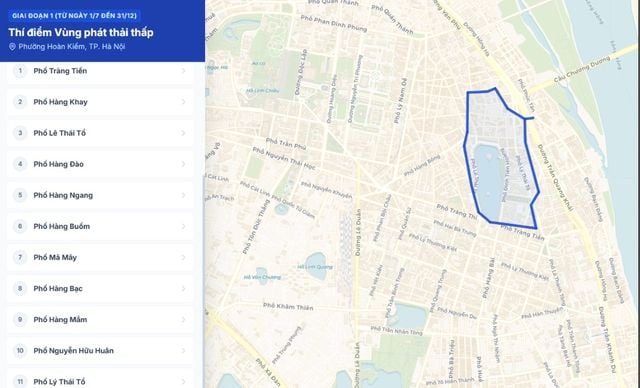
Hanoi is expected to begin a phased restriction on vehicles powered by fossil fuels in the Hoan Kiem district from July 1, 2026, with tighter controls on gasoline-powered motorcycles. The measures are part of a low-emission-zone (LEZ) pilot aimed at shifting mobility toward cleaner vehicles.
Commercial motorcycles (Grab, Gojek, Be, etc.): All gasoline-powered motorcycles used for business on technology-enabled platforms are banned.
Personal motorcycles: Traffic restrictions apply within fixed time windows on weekends: Friday 18:00–24:00, and Saturday and Sunday 06:00–24:00.
Buffer zone restrictions (Hang Dau Street, Phung Hung to Tran Nhat Duat): A ban on cars with more than 16 seats during peak hours (6:00–9:00 and 16:00–19:30).
Emission standards for cars: All cars operating within the LEZ—both those with more than 16 seats and those with 16 seats or fewer—must meet Emission Standard 4 under QCVN 85:2025/BNNMT.
Trucks:
Exceptions: Priority vehicles and vehicles with special circulation permits issued by authorities remain allowed under the rules.
During the first three months of implementation, residents in the pilot area will register online with authorities regarding the transition to green vehicles.
The LEZ pilot is linked to an expansion plan for Ring Road 1.
Expansion to Cua Nam ward, with the addition of 14 more streets, including Nguyen Du, Tran Hung Dao, Dien Bien Phu, and Hang Bong.
Full coverage of Ring Road 1 over an area of more than 26 km2. The boundary will be formed by dikes and major corridors such as Xa Dan, Dai Co Viet, Tran Khat Chan, Buoi, and Cau Giay.
The low-emission-zone pilot is described as a longer-term strategy for Hanoi’s transition to a green transport system. By 2028, more than 625,000 residents in Ring Road 1 are expected to completely change mobility habits toward environmentally friendly vehicles.
Premium gym chains are entering a “golden era” that is ending or already in decline, as rising operating costs collide with shifting consumer preferences toward more flexible, community-based ways to exercise. Long-term memberships are shrinking, margins are pressured by higher rents and facility expenses, and competition from smaller, more personalized…