•
•
•
•
•
•
•
•
•
•
•
•
•
•
•
•
•
•
•
•
•
•
•
•
•
•
•
•
•
•
•
•
•


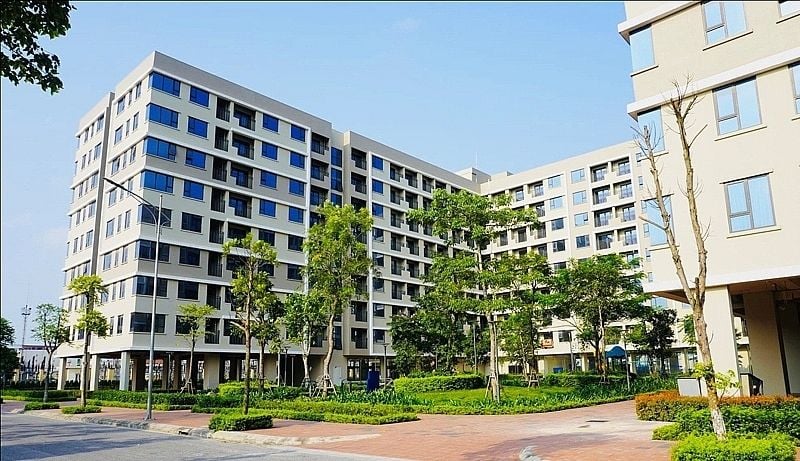
To realize the social welfare objective, Ho Chi Minh City is redefining its strategy for social housing development, with an anticipated demand of about 974,000 units by 2030. The city has implemented a number of measures, such as cutting administrative procedures, shortening processes, and preparing a large land bank for this segment. From a planning perspective, Mr. Vo Trung Hung, Deputy Head of Planning - Architecture at the City Department of Planning and Architecture, said that by 2030 the demand for social housing in Ho Chi Minh City (after consolidation) is estimated at around 974,000 units, of which workers account for about 30% and the rest are other beneficiaries. To meet this enormous demand, the city has approved 193 social housing projects through 2030. At the same time, Ho Chi Minh City identifies a need for about 1,700–2,000 hectares of land reserved for the development of this segment, and has proposed adding land to the quota through 2040 as part of adjusting the city’s master plan to 2060, while studying expansion of development space to neighboring areas such as Binh Duong and Ba Ria–Vung Tau. According to Mr. Hung, the biggest challenge currently is the land reserve problem, especially in areas near industrial zones and export processing zones. The land shortage means most workers still have to rent housing outside the city, while the mechanism requiring enterprises to establish their own land funds for social housing faces many implementation obstacles. Regarding project implementation progress, Mr. Nguyen Van Hoan, Deputy Head of Urban Development, Ho Chi Minh City Department of Construction, said that from the start of the year to date, the city has completed one project with 580 units, two projects started in Q1 with 2,643 units. Currently, the city has 12 projects under construction totaling about 10,300 units. Regarding future supply, Mr. Hoan said the city has one project entering the investor selection stage with 2,259 units, three projects expected to start before April 30 with about 4,600 units, and 41 other projects expected to start before June 30 with about 29,200 units. To ensure long-term supply, the city has reviewed and added 16 new land plots roughly equivalent to about 23,000 units. In 2026–2027, the city plans to complete investment procedures for 72 projects with a total scale of about 67,000 units. The City Department of Construction has advised reducing at least 50% of administrative procedures in this field, shortening the overall process to about 132 days. The city also maintains a monthly coordination mechanism and established a dedicated working group led by the director of the Department of Construction to promptly remove obstacles arising in the implementation of social housing projects. Legal and credit bottlenecks Aside from positive moves by authorities and the private sector, social housing development still faces many bottlenecks. Mr. Le Hoang Chau, Chairman of HoREA, says the practical implementation shows bottlenecks mainly from overlapping rules and lengthy administrative procedures. He notes that while laws and decrees have opened up legal space, the detailed guiding documents lack consistency and can even “lock” the investor’s ability to execute. As a result, many projects approved in master planning still have to restart licensing procedures, delaying implementation times and eroding investment opportunities. HoREA argues this is an urgent issue that needs timely review and adjustment while refining the legal framework for social housing. From a business perspective, Mr. Le Huu Nghia, CEO of Le Thanh Company, assesses that the city’s standard 7-step process for social housing projects (132 days for private projects) is a commendable effort. However, in practice, completing the procedures takes three times longer, which remains a major challenge. Mr. Nghia notes that procedures such as approval of investment policy, planning appraisal, land-use conversion, or building permits all generate many obstacles requiring coordination among various departments. Previously project timelines were 3–4 years; now they have been shortened to around 2 years, but that is still a major hurdle. Additionally, enterprises face difficulties in obtaining capital when the price cap on social housing undermines financial performance. He proposes exempting certain procedures such as acceptance testing, auditing, and building permits and allowing higher population targets to provide space for project implementation. Mr. Nghia points to the bottleneck from the 145,000 billion VND social housing credit package. Although the subsidized interest rate is about 6.1% per year and the loan term is long, banks remain wary of losses due to high capital costs. Even when enterprises propose loans at commercial rates, banks fear legal risks. In practice, this has caused many projects that are ready to proceed to be delayed due to capital flow restrictions.



Premium gym chains are entering a “golden era” that is ending or already in decline, as rising operating costs collide with shifting consumer preferences toward more flexible, community-based ways to exercise. Long-term memberships are shrinking, margins are pressured by higher rents and facility expenses, and competition from smaller, more personalized…




