•
•
•
•
•
•
•
•
•
•
•
•
•
•
•
•
•
•
•
•
•
•
•
•
•
•
•
•
•
•
•
•
•


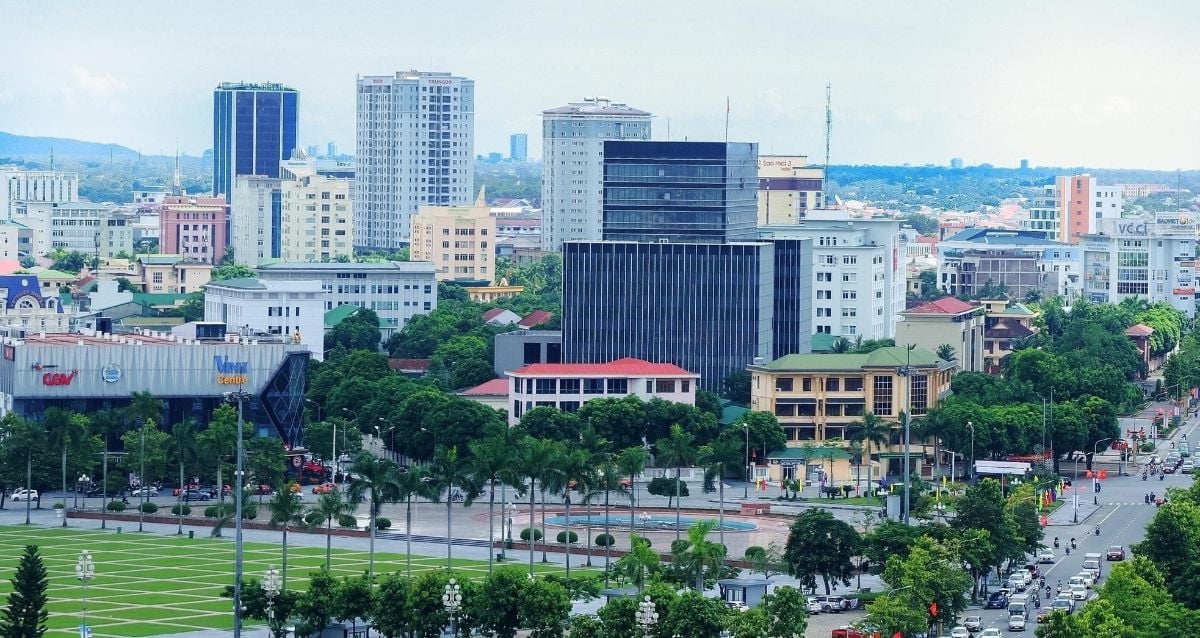
The Nghệ An Province People’s Committee has issued a decision publishing the list of urban-type II and III towns and wards that meet urban development standards in the province, providing an important basis for planning and allocating development resources in the new phase.
Under the decision, Nghệ An has one urban-type II urban area: the city of Vinh, including the wards of Thanh Vinh, Truong Vinh, Vinh Hung, Vinh Loc, Vinh Phu and Cua Lo.
At urban-type III level, Nghệ An has 22 urban areas announced after review, distributed across multiple localities. Notable urban areas include:
In addition, the province announced the following urban-type III areas: Nam Dan, Dung (Dai Dong), Do Luong, Tan Ky, Hoa Thanh (Yen Thanh), Dien Thanh (Dien Chau), Cau Giat (Quynh Luu), Quy Hop, Kim Son (Que Phong), Tan Lac (Quynh Chau), Kim Nhan (Anh Son), Nghia Dan, Thach Giam (Tuong Duong), Muong Xen, Son Hai (Quynh Phu), Song Dinh (Tam Hop, Chau Loc) and Cay Chanh (Nhan Hoa).
The province also announced 11 wards achieving urban development levels. Specifically, Cua Lo ward achieved urban-type II status. The wards Truong Vinh, Thanh Vinh, Vinh Hung, Vinh Phu, Vinh Loc, Thai Hoa, Tay Hieu, Hoang Mai, Tan Mai and Quynh Mai achieved urban-type III status.
The urban classification is based on Resolution No. 111/2025/UBTVQH15 of the National Assembly’s Standing Committee, effective from January 1, 2026.
A key change is that the urban classification system was shortened from 6 types to 4 types: special cities, Type I, II, and III. The evaluation criteria were also reduced from 5 to 3 main groups.
The three criterion groups are:
This approach is intended to assess the substantive development of urban areas rather than only administrative status.
Under the revised regulations, authority to recognize urban areas is moving toward greater decentralization. The Ministry of Construction recognizes Type I urban areas, while provincial-level People’s Committees are empowered to recognize Type II and III urban areas and the communes within them. The regulation aims to reduce administrative procedures and increase local initiative in organizing urban space development.
Additionally, under the new rule, urban areas are defined by development space, their nature and role in the national urban system, rather than being confined to the boundaries of a single administrative unit. This allows an urban area to extend across multiple communes.
Publishing the list of urban areas does not mean the creation or upgrade of administrative units such as cities or towns. It is a classification exercise to assess urban development levels using socio-economic, urbanization and infrastructure criteria, serving as a basis for planning, investment promotion and resource allocation in the period ahead.


Premium gym chains are entering a “golden era” that is ending or already in decline, as rising operating costs collide with shifting consumer preferences toward more flexible, community-based ways to exercise. Long-term memberships are shrinking, margins are pressured by higher rents and facility expenses, and competition from smaller, more personalized…




