•
•
•
•
•
•
•
•
•
•
•
•
•
•
•
•
•
•
•
•
•
•
•
•
•
•
•
•
•
•
•
•
•


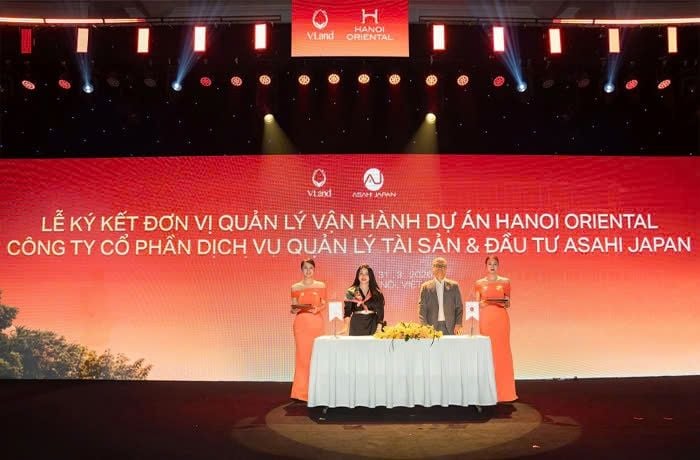
Toward creating a refined and sustainable living standard at Hanoi Oriental, a low-rise luxury residential development on Nguyen Mậu Tài Street (Gia Lâm), VLand Vietnam signed a partnership with Asahi Japan to apply the Japanese operating philosophy to the project and elevate residents’ living experience.
In a real estate market that is increasingly competitive, home buyers’ decisions no longer rest only on tangible factors such as location, design, or amenities. In practice, the biggest concerns appear after handover, when security is not well controlled, living space is disrupted, infrastructure deteriorates rapidly, and management services are inconsistent. These issues affect the living experience and erode asset value over time.
In response to this situation, VLand Vietnam chose a different path for Hanoi Oriental—the low-rise luxury development on Nguyen Mậu Tài Street (Gia Lâm)—by partnering with Asahi Japan, a property management unit operating to Japanese standards. The stated aim is for Hanoi Oriental to be not just a housing complex, but a benchmark living environment that remains sustainable over time.
Omotenashi—the core philosophy of Asahi Japan’s operating model—defines hospitality with dedication, nuance, and service delivered with understanding. Unlike conventional service approaches, Omotenashi does not wait for residents to speak up; it proactively identifies and meets needs from the smallest details. This is presented as the foundation that differentiates Japanese operating models, where living experiences are standardized by “dedication – sincerity – nuance.”
At Hanoi Oriental, the philosophy is realized through operating standards including a multi-layer security system that operates continuously to ensure safety while preserving the privacy of low-rise spaces. The project also includes maintenance processes conducted periodically, with proactive forecasting and risk handling intended to help maintain long-term quality.
The human element is described as central to Asahi Japan’s operating system. At Hanoi Oriental, the management team is trained to Japanese quality standards, emphasizing meticulousness, discipline, and refinement in every interaction.
These standards are further reflected in day-to-day operations such as maintaining landscapes clean and orderly and applying the 5S approach (Sort – Set in order – Shine – Sustain – Standardize). The management process for receiving and handling residents’ requests is also described as aiming to be quick, accurate, and consistent, supporting a distinctive living experience while helping sustain living quality and long-term asset value.
As a premium low-rise project in central Gia Lâm, Hanoi Oriental is positioned as a private living space where residents can enjoy a balanced life between convenience and serenity.
In addition to the central location advantages of East Hanoi—an area undergoing substantial investment in transport infrastructure and planning—Hanoi Oriental offers 201 low-rise premium homes, including 185 townhouses and 16 villas. The development is described as featuring iconic show-window architecture and a synchronized internal-external utilities system designed to deliver a complete living environment from daily activities to peaceful living experiences.
With the Japanese operating standards foundation from Asahi Japan, the project’s future residents are described as not only owning a home, but living in an environment maintained with stability, safety, and meticulousness over time. The long-term goal stated in the article is to help sustain property values by keeping living quality aligned with asset value.
The article also notes that VLand Vietnam has introduced a policy of two years of free property management for customers choosing Hanoi Oriental, intended to provide a full experience of the Japanese-standard service.
With an operating platform, location potential, Vietcombank’s financial support, and a stated development direction, Hanoi Oriental is expected to continue attracting buyers seeking a low-rise luxury living space where value is created and preserved sustainably over time.
Premium gym chains are entering a “golden era” that is ending or already in decline, as rising operating costs collide with shifting consumer preferences toward more flexible, community-based ways to exercise. Long-term memberships are shrinking, margins are pressured by higher rents and facility expenses, and competition from smaller, more personalized…




