•
•
•
•
•
•
•
•
•
•
•
•
•
•
•
•
•
•
•
•
•
•
•
•
•
•
•
•
•
•
•
•
•


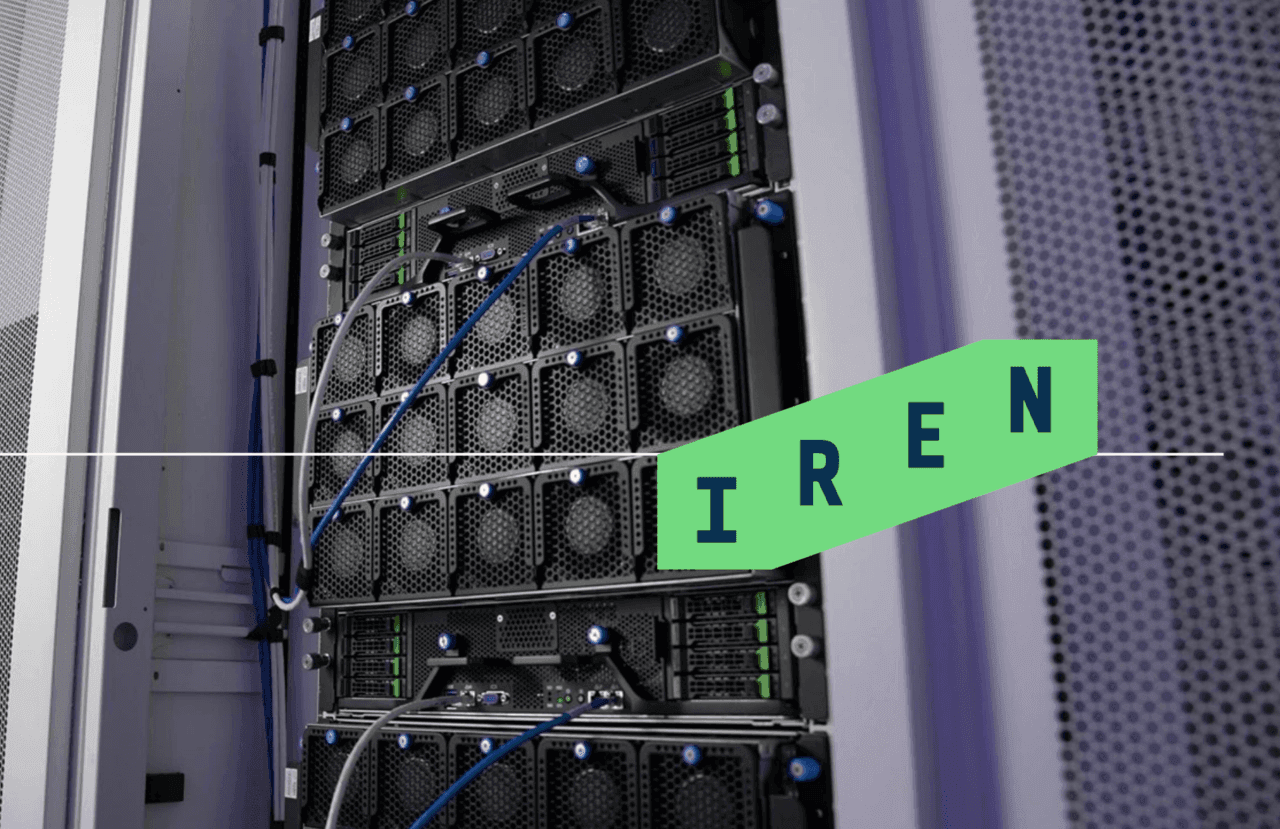
IREN Limited’s shares whipsawed on Friday as investors weighed intensifying scrutiny of the company’s pivot from Bitcoin mining to AI-focused cloud infrastructure. The shift could reshape IREN’s long-term growth profile, but it also raises new questions about funding needs and potential dilution.
During the April 24 U.S. session, IREN traded with notable intraday swings before finishing regular trading up 7.50% at $52.02. The stock then added 1.67% in after-hours trading to $52.89. Shares ranged from a session high of $54.14 to a low of $50.13, reflecting a market still adjusting to whether IREN should be valued primarily as an AI infrastructure provider rather than a crypto miner.
Over a longer window, the move has been dramatic. IREN has surged more than 60% from roughly $31.62 on March 30 to $52.02 by April 23, and it is up about 753% year-on-year, according to figures cited in the report. However, momentum has not been steady: the stock gained 26.51% over the past 30 days while remaining down 8.22% over the last 90 days, consistent with consolidation after a steep run.
Wall Street remains constructive, though less exuberant. Cantor Fitzgerald cut its price target on IREN to $61 from $82 while reiterating an “Overweight” rating, citing sustained growth in AI computing demand.
Broader analyst positioning cited in the report showed 13 “Buy” ratings, four “Hold,” and two “Sell,” with an average price target of $70.08. The distribution suggests upside expectations, but with increased uncertainty as the business model transition unfolds.
Technical indicators in the report pointed to a market approaching crowded positioning. The RSI was cited at 66.76, near levels often associated with “overbought” conditions. The report also referenced a broader downtrend on the weekly chart.
Technicians highlighted support near $44.95 and resistance around $56.01, indicating traders are watching whether the stock can hold recent gains or faces a deeper pullback.
At the center of the debate is funding and execution. The report said IREN is considering a capital-raising plan of up to $6 billion. Analysts warn that, if executed at scale, it could result in roughly 37.5% share dilution—an overhang for equity investors trying to value the AI transition after the stock’s outsized run.
Valuation metrics cited in the report underscore why dilution and performance delivery are closely linked. IREN’s price-to-earnings ratio was described as above 80, while its price-to-sales ratio was cited near 38—levels that leave limited room for disappointment.
The report also highlighted how sensitive the market appears to execution. It referenced expected EPS of -$0.52 versus a consensus estimate of -$0.18, and revenue of $184.69 million versus expectations of $228.44 million, alongside a reported net loss of $155.40 million. While the company was described as holding $3.26 billion in cash, it was also characterized as maintaining a high debt load, increasing focus on balance-sheet strategy as capital expenditures rise.
Institutional activity added to the narrative. The report noted that Rakuten Securities established a new position worth about $1.73 million in the fourth quarter. It also cited short interest at 17.6%, which can contribute to volatility around major catalysts.
IREN is scheduled to report fiscal third-quarter results for the period ended March 31 on May 7, with a conference call set for 5:00 p.m. Eastern Time. Investors are expected to focus on AI-related revenue progression and GPU utilization—metrics that could help determine whether the buildout is translating into durable demand rather than speculative re-rating.
The strategic blueprint described in the report centers on building data centers and GPU clusters in renewable-energy regions across the U.S. and Canada, with the goal of creating a vertically integrated AI cloud platform. The company is also pursuing partnerships with hyperscalers, including Microsoft ($MSFT), reflecting an ambition to compete in a market shaped by scale, power availability, and long-term customer contracts.
For now, IREN’s transformation remains a high-stakes repositioning. The shift from crypto mining to AI infrastructure has supported “growth re-rating” momentum, but it also introduces heightened “execution risk” and the possibility that capital intensity could exceed expectations. The May earnings report is expected to be a key test of whether the AI narrative can be supported by operational metrics—and whether investor enthusiasm can persist despite dilution concerns.

Premium gym chains are entering a “golden era” that is ending or already in decline, as rising operating costs collide with shifting consumer preferences toward more flexible, community-based ways to exercise. Long-term memberships are shrinking, margins are pressured by higher rents and facility expenses, and competition from smaller, more personalized…