•
•
•
•
•
•
•
•
•
•
•
•
•
•
•
•
•
•
•
•
•
•
•
•
•
•
•
•
•
•
•
•
•


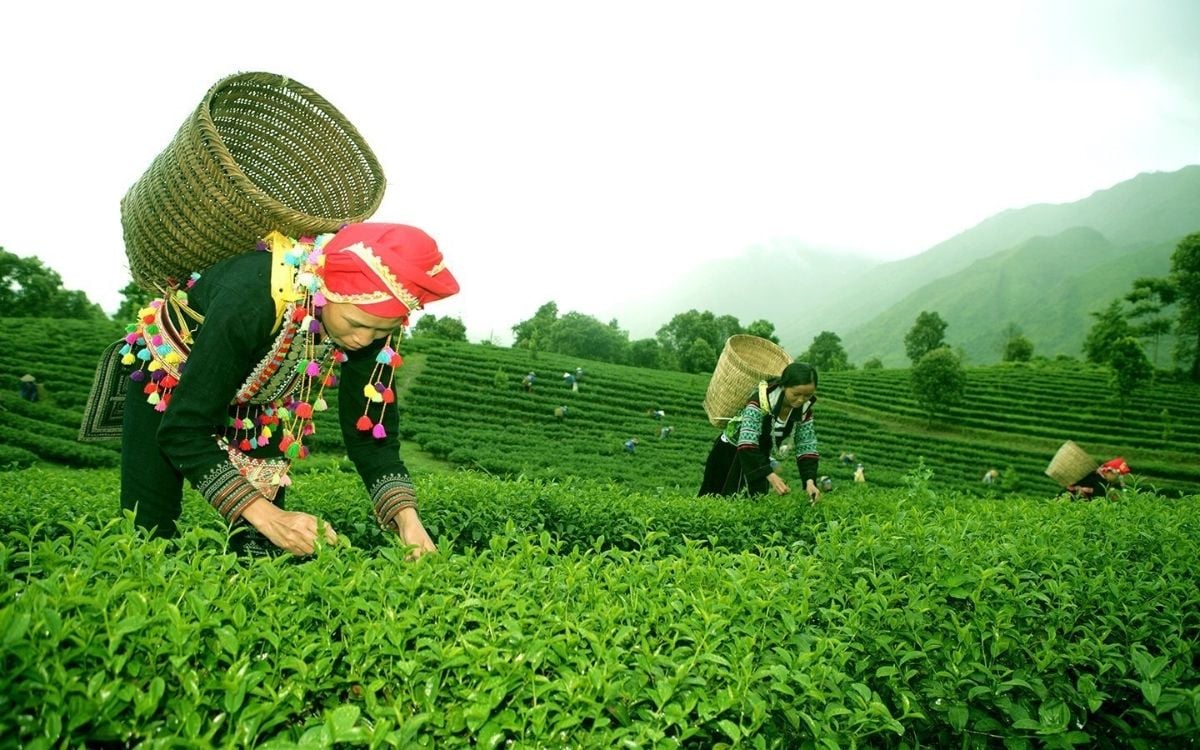
Lai Châu is gradually developing green, high-value agriculture by leveraging its natural advantages and a rich forest ecosystem. The province is focusing on key products including tea, specialty rice and medicinal herbs, while promoting value-chain linkages and applying technology to raise agricultural product value and support sustainable development.
On April 24, 2026, the Ministry of Agriculture and Environment, in collaboration with the Lai Châu Provincial People’s Committee, held a conference titled “Development of commodity agriculture and medicinal herbs toward a green economy.” The event brought together leaders from ministries and localities, along with experts, businesses, cooperatives and media agencies. The conference aimed to review the region’s potential and advantages in flagship agricultural products and to propose solutions to increase value and complete the value chain from production to processing and consumption.
In his opening remarks, Lai Châu Chairman Hà Quang Trung said the province’s favorable natural conditions, distinctive landscapes and diverse cultural identities provide strong potential for green agriculture and high-value medicinal herbs. He noted that in recent years, Lai Châu has restored and developed quality agricultural products such as Seng Cù rice and Te Rau rice, while expanding areas for economically valuable crops including rubber, tea, macadamia, cinnamon and Lai Châu ginseng.
The province is also leveraging aquaculture potential in reservoirs of large hydropower projects such as Lai Châu, Sơn La, Huổi Quảng - Bản Chát. Chairman Hà Quang Trung said developing commodity agriculture and medicinal herbs toward a green economy is a breakthrough initiative that supports policy implementation and attracts investment in agriculture.
By 2025, Lai Châu had more than 520 hectares of production under safety standards, with much of the area applying VietGAP and organic methods. The province also reported over 3,000 hectares of rice using advanced techniques, and about 33% of farms treating waste effectively.
Deputy Director Nguyễn Thành Đồng of the Lai Châu Department of Agriculture and Environment said the province has an area of over 9,000 km², more than 500,000 hectares of forest and around 16,000 hectares of water surface. He added that the province’s diverse terrain and multiple microclimatic subregions support specialty products such as tea, specialty rice, cold-water aquaculture and medicinal herbs under forest canopy.
In recent years, Lai Châu has stepped up agricultural restructuring, implementing policies related to waste treatment, soil rehabilitation, greenhouse development, irrigation and safe production standards.
For the 2026–2030 period, Lai Châu aims to develop agriculture in a green, circular, multi-value and low-emission direction. The province plans to focus on land consolidation, technology application, digital transformation and value-chain development.
Planned priorities include expanding production areas for tea, rice, fruit trees, livestock and aquaculture, while strongly developing flagship products such as macadamia, cinnamon and medicinal herbs—especially Lai Châu ginseng with geographic indication.
Deputy Director Phạm Văn Duy of the Department of Quality, Processing and Market Development said that despite relatively clean land, the scale of organic production in Lai Châu remains limited. He reported that the organic area is just over 40 hectares.
Mr. Phạm Văn Duy proposed prioritizing centralized production zones anchored to key products such as tea, specialty rice and medicinal herbs. He also called for building farm-code zones and traceability systems, organizing production along value chains, and strengthening linkages among enterprises, cooperatives and farmers, with enterprises taking the lead in the market. Expanding product quality and market access through supermarkets, e-commerce and exports was also identified as a key factor.
Deputy Director Phan Quang Minh of the Department of Livestock and Veterinary (Ministry of Agriculture and Environment) said Lai Châu can develop large-scale centralized livestock farming due to its land resources and favorable natural conditions. However, he noted that to ensure efficiency and safety, breeding facilities should be relocated away from residential areas and centralized breeding zones should be planned in suitable locations such as Mường Than, Than Uyên or Bình Lư.
He added that this requires coherent investment in electrical, water, transportation and digital infrastructure to raise production capacity.
At the conference, multiple memoranda of understanding were signed between management authorities, enterprises and partners to promote development of raw material regions, technology transfer, and production and export linkages for agricultural products and medicinal herbs.
The event also featured an OCOP product display area and a showcase of Lai Châu’s flagship agricultural products and green products, attracting interest from delegates, investors and residents.






Premium gym chains are entering a “golden era” that is ending or already in decline, as rising operating costs collide with shifting consumer preferences toward more flexible, community-based ways to exercise. Long-term memberships are shrinking, margins are pressured by higher rents and facility expenses, and competition from smaller, more personalized…