•
•
•
•
•
•
•
•
•
•
•
•
•
•
•
•
•
•
•
•
•
•
•
•
•
•
•
•
•
•
•
•
•


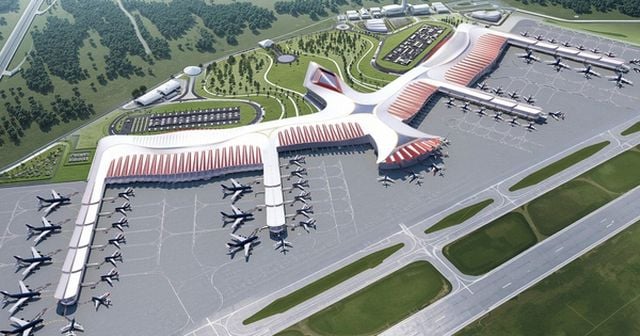
Nine months into construction, the Sun Group–funded Phu Quoc International Airport expansion project—total investment of VND 22,000 billion—is progressing toward operation under international standards. With an 18-month implementation timeline, the project is advancing rapidly in aviation infrastructure.
Latest updates show that runway 2’s concrete pavement has reached about 58% completion for the base layer. The high-quality concrete layer has begun construction after just four months of base laying. The project targets completion of the 3,300-meter runway by June 30.
To meet ICAO 4E standards, the runway design includes specifications intended to support wide-body aircraft such as the Boeing 787 and Airbus A350-900. The cement concrete is planned at 78 cm thickness to withstand tire pressure up to 1.71 MPa and aircraft weight up to 400 tons.
The expansion is being built in parallel with airport operation. At the passenger terminal T2, the shell structure has reached about 85% completion. Since early March 2026, the project has moved into steel roofing framework installation, described as a key milestone shaping the terminal’s future architectural space.
The VIP terminal, serving delegations and high-level guests, has completed 100% of the structural shell. Roof structure work is about 60%, indicating progress beyond expectations and moving quickly toward completion.
Aircraft apron and taxiway works are also advancing rapidly, with some areas already fully completed. The progress is intended to lay the groundwork for higher operational capacity in the coming period.
Under the approved plan, the expanded airport will meet ICAO 4E requirements, enabling reception of wide-body aircraft including the Boeing 747, 787, and Airbus A350. The project covers a total area of 1,050 hectares and is designed to increase annual passenger capacity to 20 million—4.5 times the current capacity.
Runway infrastructure includes extending Runway 1 to 3,500 meters and constructing Runway 2 at 3,300 meters. The apron system will be expanded to more than 120 positions, including 71 directly connected to jet bridges.
The project will apply a suite of aviation technologies, including TAM – Total Airport Management, biometric journey with contactless interfaces, modern baggage handling ICS, and automated apron, underground refueling, and remote-controlled jet bridges. The initiative aims for smart airport standards in the region, reducing passenger processing time to 15–20 seconds per passenger.
Phu Quoc International Airport is expected to become a “national position symbol.” Official operation will be handled by Sun Group’s Sun Airport Joint Stock Company (SAC), a subsidiary of Sun Group, starting January 1, 2026.
When completed, the airport’s capacity is expected to reach 50 million passengers per year—more than 10 times the current level—supporting demand for APEC 2027 and contributing to positioning Ngoc Island as a regional hub for tourism, events, and trade.
Premium gym chains are entering a “golden era” that is ending or already in decline, as rising operating costs collide with shifting consumer preferences toward more flexible, community-based ways to exercise. Long-term memberships are shrinking, margins are pressured by higher rents and facility expenses, and competition from smaller, more personalized…