•
•
•
•
•
•
•
•
•
•
•
•
•
•
•
•
•
•
•
•
•
•
•
•
•
•
•
•
•
•
•
•
•


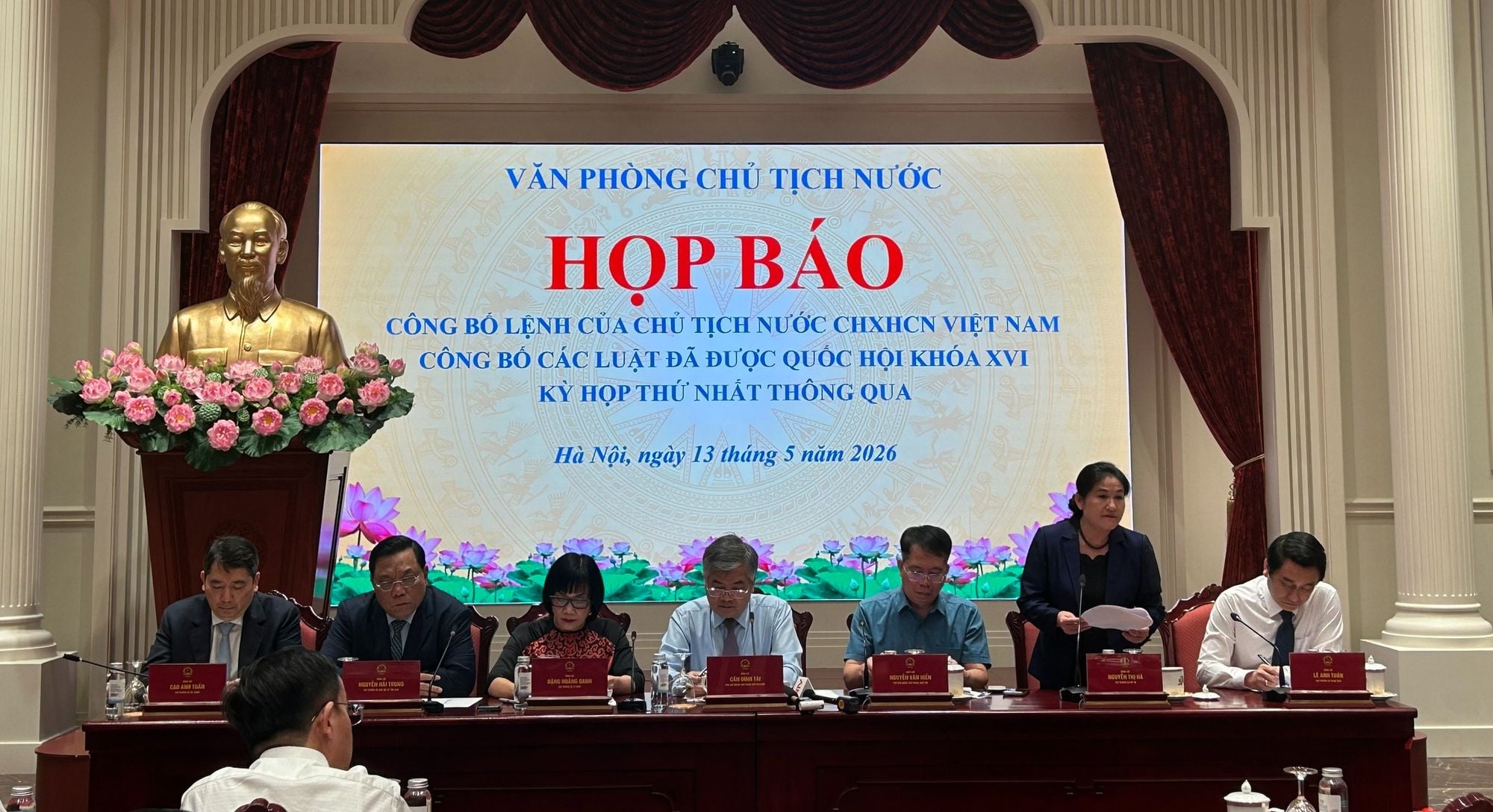
The Presidential Office held a press briefing on the afternoon of May 13, where Deputy Minister of Finance Cao Anh Tuan presented changes under the Law amending and supplementing certain provisions of the Personal Income Tax Law (PIT), the Value-Added Tax Law (VAT), the Corporate Income Tax Law (CIT), and the Special Consumption Tax Law.
Under the new law, the tax-exempt revenue threshold for individuals and households has been removed from the law itself. Instead, the Government is authorized to set the threshold based on macroeconomic indicators and the budget balance, to determine an annually appropriate revenue level consistent with the socio-economic context in each period.
Deputy Minister Cao Anh Tuan said delegating authority to the Government provides a legal basis for flexible fiscal policy, including tax policy. He also noted that the approach institutionalizes content referenced in Conclusion No. 18-KL/TW, Resolution No. 66-NQ/TW, the Law on the Organization of the National Assembly, and similar provisions that delegate power to the Government under other tax-related laws and National Assembly resolutions currently in force.
Based on the regulation, the Government recently issued Decree No. 141 of April 29, 2026, defining the tax-exempt revenue threshold for individuals and households at VND 1 billion, which is double the previous regulation.
Finance Minister Ngo Van Tuan previously stated that the revenue level used to determine subjects not subject to VAT and exempt from CIT is a dynamic matter, depending on the socio-economic situation, and should be assigned to the Government.
Mr. Ngo Van Tuan said the socio-economic context includes financial policies, tax policies, economic growth, interest rates, exchange rates, employment, income, war, reduced supply of goods, shrinking customer base, and changes in consumer behavior—factors that can significantly affect purchasing power, costs, and the business environment.
He added that the Government will assess and analyze the impacts very specifically so that household businesses can exist and develop, transition to enterprises, nurture revenue, and affect tax collection—while also aiming to support the highest possible socio-economic outcomes when setting the threshold.
The Finance Minister emphasized that the Government assessed the overall impact on tax revenue, growth, and people and businesses when enacting the Law.
According to calculations by the tax authority, currently about 2.56 million households and individuals have revenue under VND 1 billion.
With the proposed threshold, the expected revenue reduction is 16,650 billion VND compared to 2025 (under the household tax regime and the 100 million VND/year exemption), and a reduction of 4,850 billion VND compared to the current policy that raised the tax-exempt threshold to 500 million VND/year.
The Law amending and supplementing certain provisions of the Personal Income Tax Law, the Value-Added Tax Law, the Corporate Income Tax Law, and the Special Consumption Tax Law takes effect from January 1, 2026.

Premium gym chains are entering a “golden era” that is ending or already in decline, as rising operating costs collide with shifting consumer preferences toward more flexible, community-based ways to exercise. Long-term memberships are shrinking, margins are pressured by higher rents and facility expenses, and competition from smaller, more personalized…