•
•
•
•
•
•
•
•
•
•
•
•
•
•
•
•
•
•
•
•
•
•
•
•
•
•
•
•
•
•
•
•
•


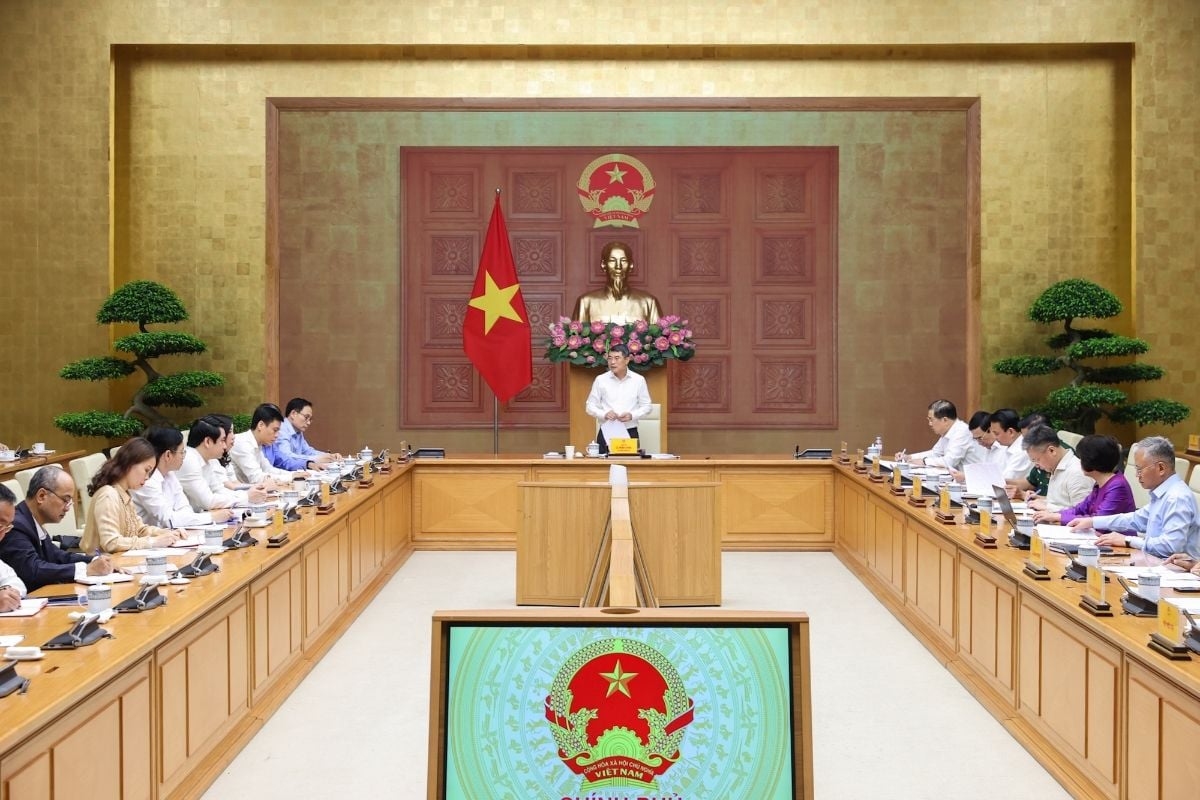
Prime Minister Lê Minh Hưng chairs the working session with the Ministry of Foreign Affairs. Photo: VGP At the meeting, delegates focused on evaluating the results achieved, analyzing the evolving trends in the global situation and their impact on Vietnam; and discussed measures to deepen bilateral and multilateral relations and to enhance the effectiveness of diplomacy in service of development. In his concluding remarks, Prime Minister Lê Minh Hưng stressed that the 14th National Congress of the Party has identified strengthening diplomacy and international integration as a key and ongoing task, reflecting a significant shift in foreign policy thinking. According to the head of government, in a world that is rapidly evolving and unpredictable, every international fluctuation directly affects Vietnam in an increasingly multi-dimensional, cross-sectoral manner. This requires the diplomacy sector to raise proactivity, forecasting capacity, and policy response skills, and to prepare response scenarios early and in advance. The Prime Minister noted that the Ministry of Foreign Affairs has contributed to maintaining a peaceful and stable environment for national development; advising on improving foreign policy thinking and lines; expanding markets for Vietnamese goods; leveraging international resources for development and raising the country’s international position. Nevertheless, the Prime Minister also said that research, forecasting, and advisory work in some fields still needs reform to meet new requirements, especially in market expansion, leveraging advantageous sectors, and improving inter-agency coordination. Regarding tasks for the near future, the Prime Minister asked the Ministry of Foreign Affairs to promptly translate the Party’s XIV Congress foreign policy into programs, projects, and concrete solutions. This includes the Politburo’s resolution on implementing the XIV Congress foreign policy, Resolution 59 on international integration in the new situation, Conclusion 18-KL/TW, and related mechanisms and policies for international integration. These items should be presented to the Government and the Prime Minister in May and in the second quarter of 2026 to enable early implementation. The Prime Minister also called on the Ministry of Foreign Affairs to work with related agencies to review and revise the ministry’s functions, tasks, and organizational structure; to build a system of KPIs to evaluate staff; and to actively complete the mechanism for managing external activities, especially in the fields of foreign economic diplomacy, investment promotion, tourism, and technological diplomacy. For high-level diplomacy work, the Prime Minister urged a strong reform of content and form of organization to be substantive, effective, aligned with partner requirements and Vietnam’s development needs. Along with this, accelerate digital transformation and build a system to monitor and manage the implementation of international commitments after visits and meetings of senior leaders. The Prime Minister also urged Vietnamese representative offices abroad to be more proactive in understanding on-the-ground situations, expanding import-export markets, promoting cooperation in science and technology, labor, and other areas where Vietnam has demand. For the Foreign Affairs Academy, the Prime Minister requested focusing on developing the teaching staff, advancing strategic research, and expanding cooperation with universities, research institutes, and domestic and international experts to improve the quality of policy advice in foreign affairs.
Premium gym chains are entering a “golden era” that is ending or already in decline, as rising operating costs collide with shifting consumer preferences toward more flexible, community-based ways to exercise. Long-term memberships are shrinking, margins are pressured by higher rents and facility expenses, and competition from smaller, more personalized…