•
•
•
•
•
•
•
•
•
•
•
•
•
•
•
•
•
•
•
•
•
•
•
•
•
•
•
•
•
•
•
•
•


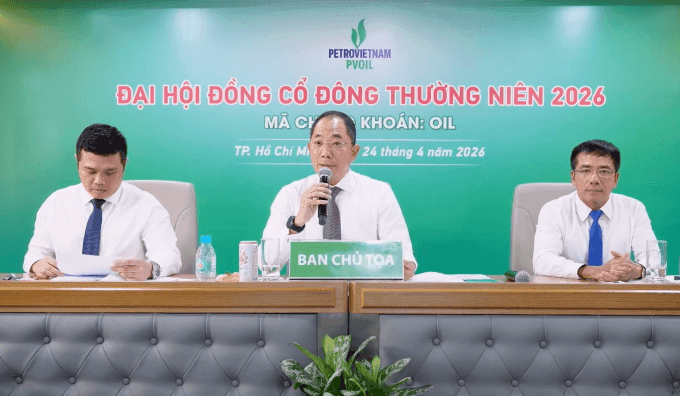
A company that operates a network of about 1,000 fuel stations said it views the impact of electric vehicles and policies restricting gasoline-powered cars in city centers as an opportunity to grow new revenue streams.
At the morning of April 24, many shareholders of Vietnam Oil Corporation (PVOIL) noted that people are gradually shifting from gasoline-powered cars to electric vehicles. They warned that this trend could negatively affect sales volumes and the company's financial indicators, and urged the management to present a response plan.
Answering shareholders as Chairman of the Board at today's meeting, Cao Hoai Duong agreed that the shift from gasoline to electric vehicles is an inevitable trend and cannot be resisted. He said this would slow the growth rate of gasoline and diesel consumption and could keep consumption growth flat in the near term.
However, Mr. Duong emphasized that PVOIL is not deterred by electric vehicles negatively impacting gasoline. Instead, he said the company views the transition as an opportunity to develop new revenue streams.
Duong said PVOIL has cooperated with VinFast since 2018 and, four years later, began building charging stations at its gas stations. To date, about 500 of PVOIL’s 995 gas stations have integrated charging.
The company plans to develop about 100 gas stations each year, with electric-vehicle charging at all of them. Duong said PVOIL views developing a retail gasoline distribution and charging network as “walking on two legs,” serving both customer groups.
He added that the company’s direction is to turn every store into an integrated energy supply point.
Without disclosing exact figures requested by shareholders, the chairman said the non-fuel services segment is “quite profitable” and currently contributes about 20–30% of profits for the member units.
Regarding policies restricting internal combustion engine vehicles in inner-city areas, management assessed that the impact is not large because PVOIL’s store network is mainly in suburban areas and provinces.
Following the morning AGM, PVOIL dismissed the Chairman, Cao Hoai Duong, and appointed Duong Manh Son (Petrovietnam's Deputy General Director) to replace him. Petrovietnam representatives said Mr. Duong will take on a new role within the group.
PVOIL is a subsidiary of Petrovietnam, operating primarily in three main areas: import-export of crude oil, and the production and distribution of gasoline. It ranks second in domestic gasoline consumption with about 23% market share, after Petrolimex. Its distribution network has about 995 stores and thousands of agents and franchisees.
PVOIL set this year’s revenue target at 150,700 billion dong, equal to last year. Pre-tax profit is expected to rise 25% to 820 billion dong.
CEO Nguyen Dang Trinh said the target differs little from the same period last year. He noted that last year the company booked a provisional expense of 150 billion dong for an investment in a related unit, which eroded profits.
PVOIL’s stock is currently trading on UPCoM. Management said they are gradually addressing auditor’s qualifications to file for listing on the Ho Chi Minh City Stock Exchange, and the company expects to move to the exchange in 2027.







Premium gym chains are entering a “golden era” that is ending or already in decline, as rising operating costs collide with shifting consumer preferences toward more flexible, community-based ways to exercise. Long-term memberships are shrinking, margins are pressured by higher rents and facility expenses, and competition from smaller, more personalized…




