•
•
•
•
•
•
•
•
•
•
•
•
•
•
•
•
•
•
•
•
•
•
•
•
•
•
•
•
•
•
•
•
•


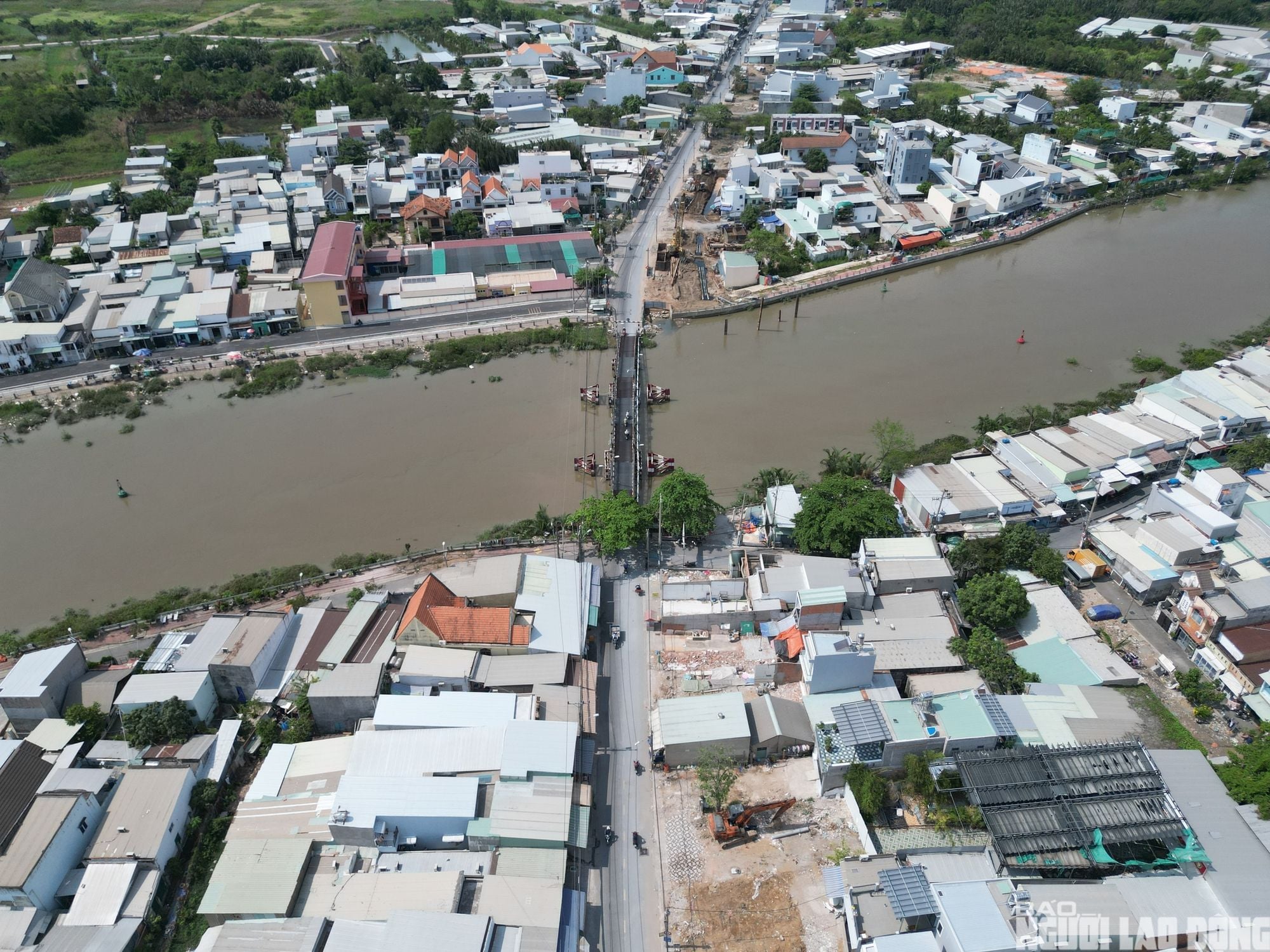
After nearly a year since construction began, the Rạch Tôm Bridge project in Hiệp Phước commune, Ho Chi Minh City, remains slow in progress. Observers at the site described a relatively quiet construction area with labor scarce, even though the bridge is an important transport link connecting Ho Chi Minh City with Tay Ninh Province.
According to a report by Người Lao Động on April 22, construction activity at the Rạch Tôm Bridge site has been limited, with many areas left with scattered materials. Package XL1 covers bridge construction, removal of old steel, and measures to ensure safety for river traffic.
At the site, the contractor is carrying out site clearance and piling work.
Mr. Nguyen Phi Lân, a resident living near the project, said the old Rạch Tôm Bridge had deteriorated for many years, leading to high expectations for the new bridge’s safety. He noted that the old bridge vibrates when trucks or cars pass, making people feel uneasy.
He added that when the project started in July 2025, local residents were hopeful for a safer bridge soon.
The project has a total investment of 497 billion VND. Construction costs account for about 141 billion VND, with the remainder allocated to site clearance and related costs.
Under the design, the bridge is about 684 meters long, including 174 meters of bridge span and 510 meters of approaches. It will be 15 meters wide with four lanes, and will include lighting, greenery, and a complete traffic organization system.
The starting point is about 320 meters from the old bridge pier on the Ho Chi Minh City side, and the end point is about 302 meters from the pier on the Tay Ninh side.
The project is scheduled to be completed on December 31, 2026.
Once finished, the Rạch Tôm Bridge is expected to replace the aging bridge and help complete the gateway route connecting Ho Chi Minh City to Tay Ninh, supporting momentum for economic and social development in the southern region and neighboring areas.
Premium gym chains are entering a “golden era” that is ending or already in decline, as rising operating costs collide with shifting consumer preferences toward more flexible, community-based ways to exercise. Long-term memberships are shrinking, margins are pressured by higher rents and facility expenses, and competition from smaller, more personalized…