•
•
•
•
•
•
•
•
•
•
•
•
•
•
•
•
•
•
•
•
•
•
•
•
•
•
•
•
•
•
•
•
•


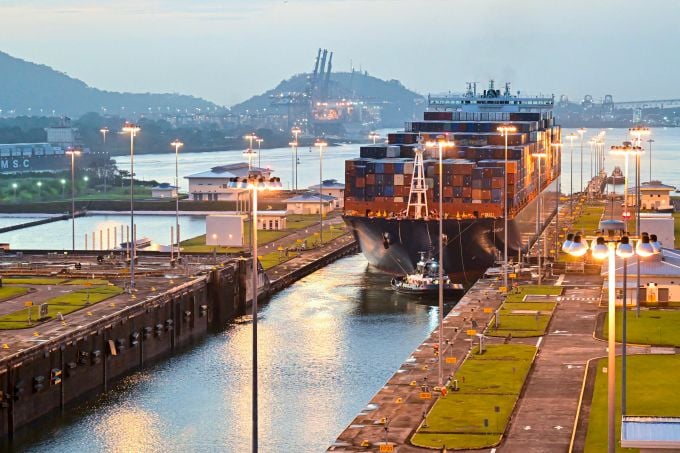
Some ships have paid up to $4 million to secure passage through the Panama Canal—about ten times the normal cost—as the Hormuz Strait remains nearly blocked, according to the Panama Canal Authority.
Typically, vessels passing through the Panama Canal pay a fixed toll of $300,000 to $400,000, depending on the ship, with reservations made in advance. Companies that do not have reservations can still transit by paying additional fees, including through auctions to win a slot. In these auctions, the earliest passage is awarded to the highest bidder, rather than ships waiting days off the coast of Panama City.
Previously, paying to go earlier generally cost about $250,000 to $300,000 more. In recent weeks, demand for unreserved slots has increased as the Hormuz Strait has been blocked.
The Panama Canal Authority said the average supplemental fee has risen to about $425,000, while top auction slots have reached up to $4 million—around ten times higher than usual.
Panama Canal administrator Ricaurte Vásquez cited one of the highest bidders as an energy shipping company. He said the bidder was a fuel vessel to Europe that was redirected to Singapore because that area is short on fuel.
Vásquez also noted that other oil companies have paid more than $3 million in additional fees to move quickly amid a sharp rise in oil prices.
Vásquez said there is no backlog at the canal. He attributed the higher costs mainly to last-minute routing changes and the urgent need to move faster when trade conditions are volatile. He emphasized that the fees are not a general market price: “They decide how high to bid.”
Rodrigo Noriega, an analyst and lawyer in Panama City, said companies may view transiting the Panama Canal as safer and cheaper amid “bombings, missiles, drones,” which can make the route more attractive than alternatives.
Noriega added that supplemental charges to expedite passage could rise further if the conflict persists and oil prices climb sharply. He said Brent crude briefly exceeded $107 a barrel this week, compared with about $66 in the same period in 2025.
He also suggested that governments may be “maximizing what they can earn from the Panama Canal.” At the same time, he said Panama faces negative effects from geopolitical tensions even as it earns more from expedited passage auctions.
On April 22, the Panamanian Foreign Ministry accused Iran of forcibly seizing a Panama-flagged vessel, MSC Francesca, in the Hormuz Strait.







Premium gym chains are entering a “golden era” that is ending or already in decline, as rising operating costs collide with shifting consumer preferences toward more flexible, community-based ways to exercise. Long-term memberships are shrinking, margins are pressured by higher rents and facility expenses, and competition from smaller, more personalized…