•
•
•
•
•
•
•
•
•
•
•
•
•
•
•
•
•
•
•
•
•
•
•
•
•
•
•
•
•
•
•
•
•


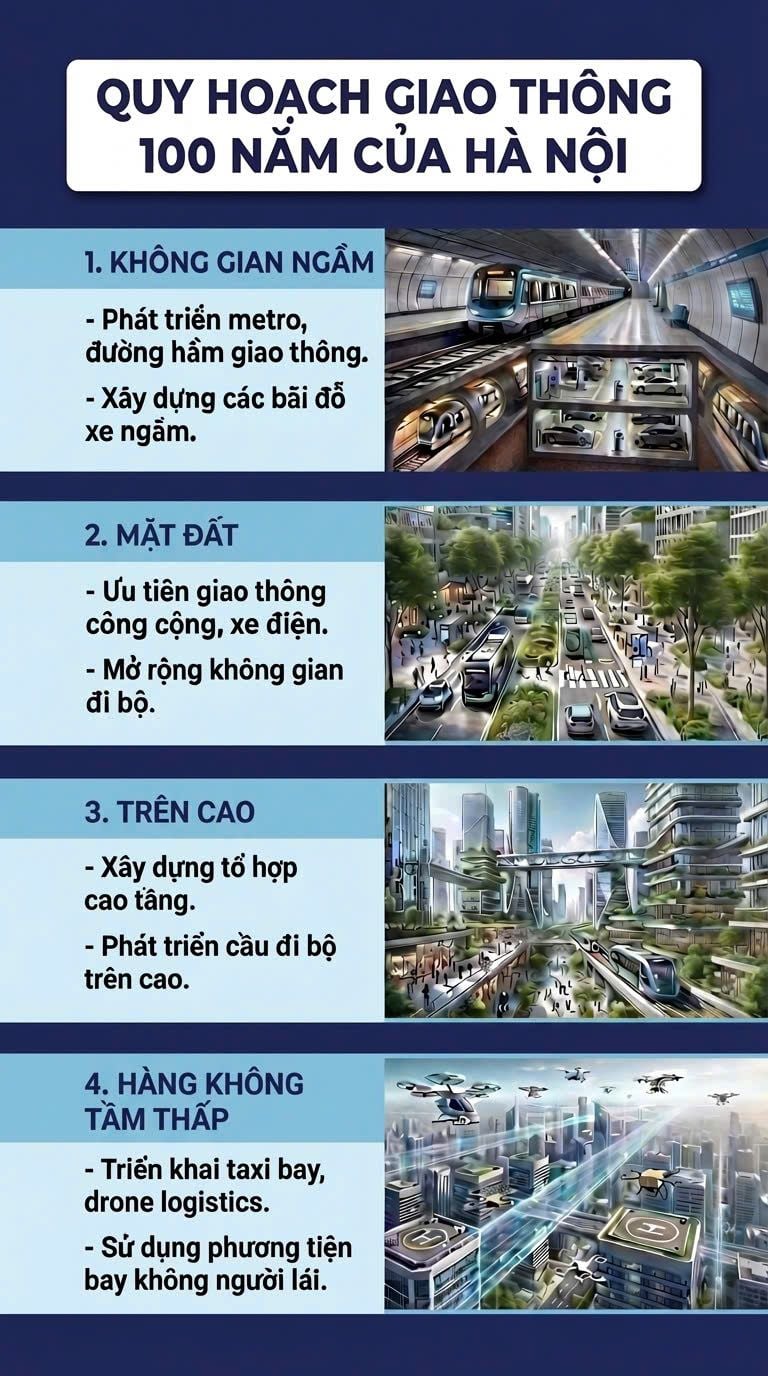
From March 12, Hanoi began collecting feedback from residents, experts, and organizations on its 100-year master plan, with a key emphasis on low-height infrastructure to support aerial taxi services. The draft outlines a long-term vision in which the city’s population is projected to reach 15–16 million by around 2045, with continued growth thereafter.
With land becoming increasingly scarce and population pressure rising, the plan seeks a multi-story, multi-layer urban model that uses vertical space rather than expanding mainly across the ground.
The draft plan is designed to address two linked challenges: limited land availability and sustained population growth. It proposes a three-dimensional approach to urban development to improve land-use efficiency while maintaining heritage sites, water bodies, and green spaces.
The plan would simultaneously develop underground, surface, and upper-space areas to create a multi-layer urban framework.
Underground space is positioned as a core infrastructure layer for city services:
Surface space would be reserved primarily for people and natural areas. The draft calls for reclaiming ground area for pedestrians, cultural activities, and green spaces by expanding walkways, sidewalks, and public squares, while enhancing parks, flower gardens, and water features.
According to the plan, this approach is intended to improve living environmental quality, reduce traffic pressure, and create more vibrant community spaces. It also aims to protect historical and cultural values, including Hanoi’s Old Quarter, while supporting festivals, community activities, and traditional architecture.
While ground space is focused on public uses, upper-space areas are planned as high-density zones for new economic activity. The draft envisions high-rise complexes at major transportation hubs and in new urban development areas, particularly around metro stations and ring lines.
It also proposes an elevated walkway network to connect buildings and complexes, forming a multi-level mobility grid within the city.
A prominent element of the master plan is the development of low-height infrastructure for aerial taxi services. The draft also describes the future possibility of flight corridors for passenger taxi aircraft, drone deliveries, and other aerial vehicles, as urban aviation technology advances.
The plan suggests that aerial vehicles could help reduce pressure on ground transport and support new service models in areas such as tourism, logistics, and smart urban monitoring.
Overall, the draft master plan frames vertical urban development as a way to balance growth with preservation—using underground space for transport and utilities, ground space for public life and cultural protection, and upper space for economic activity and mobility connections, including low-height infrastructure for aerial taxis.





Premium gym chains are entering a “golden era” that is ending or already in decline, as rising operating costs collide with shifting consumer preferences toward more flexible, community-based ways to exercise. Long-term memberships are shrinking, margins are pressured by higher rents and facility expenses, and competition from smaller, more personalized…




