•
•
•
•
•
•
•
•
•
•
•
•
•
•
•
•
•
•
•
•
•
•
•
•
•
•
•
•
•
•
•
•
•


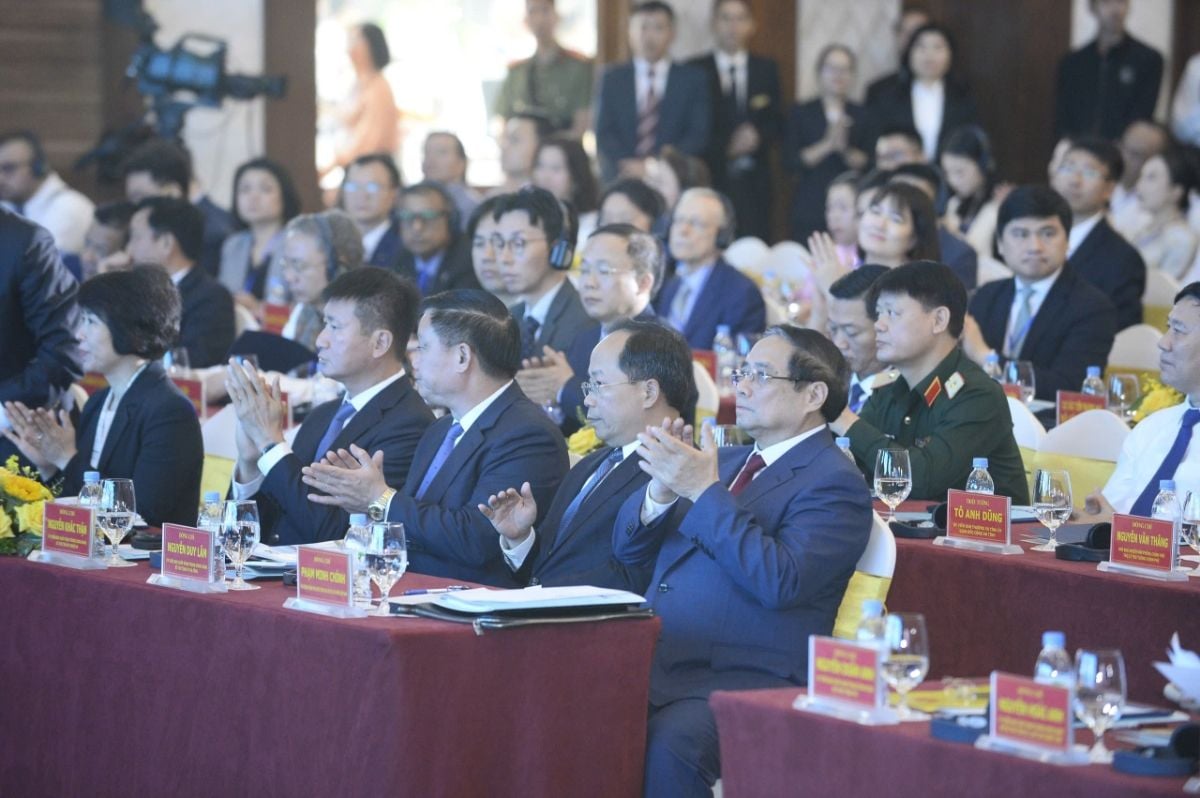
Prime Minister Pham Minh Chinh and delegates attended the investment promotion conference organized by the Thanh Hoa Provincial People’s Committee on the morning of March 29. The event drew representatives from ministries and agencies, along with more than 800 delegates representing domestic and foreign enterprises and groups.
In his opening remarks, Nguyen Hoai Anh, Chairman of the Thanh Hoa Provincial People’s Committee, highlighted the province’s commitments to improving the investment and business environment and to accompanying both domestic and foreign investors. Thanh Hoa is located about 150 km south of Hanoi, with a natural area of 11,115 square kilometers and a population of over 4.3 million, ranking 12th in area and 8th in population nationwide.
Chairman Nguyen Hoai Anh said Thanh Hoa has strategic importance for regional and national socio-economic development, supported by infrastructure and development potential.
On infrastructure, he noted that the province hosts the Ngh Son Economic Zone covering 106,000 hectares, one of eight coastal economic zones in Vietnam. The Ngh Son Deep-Sea Port is planned as a special port capable of handling ships over 100,000 tons.
Thanh Hoa also has 19 industrial zones totaling over 6,000 hectares and 126 industrial clusters totaling nearly 5,300 hectares.
In agriculture, the chairman cited large land resources, including more than 243,000 hectares of agricultural land, more than 652,000 hectares of forestry land, and nearly 14,000 hectares of aquaculture. Thanh Hoa has 102 km of coastline and a territorial sea area of over 17,000 square kilometers, which he said creates favorable conditions for developing agriculture, including high-tech agriculture.
On human resources, he emphasized that Thanh Hoa is in a “golden demographic period,” with a labor force of more than 2.7 million. The province has two universities, including one Hanoi Medical University affiliate, and 11 colleges, training human resources for society and enterprises.
Chairman Nguyen Hoai Anh said the local economy maintained high growth, averaging 10.24% during 2021-2025.
Regarding foreign investment, he stated that to date, investors from 21 countries and territories are operating in Thanh Hoa, with 192 FDI projects and total registered investment of nearly $16 billion, ranking ninth nationwide for FDI attraction.
Before the presence of the Prime Minister and delegates, Chairman Nguyen Hoai Anh reaffirmed Thanh Hoa’s commitments to:
He also outlined support for investors across the investment cycle. For investors exploring opportunities, the province will accompany them in surveying and selecting investment locations and assist with administrative procedures. For investors that decide to invest, Thanh Hoa will assist with land clearance to implement projects and focus on timely resolving difficulties and obstacles during both investment and operation.
On the monthly dialogue mechanism with enterprises, the chairman said the Chairman of the Thanh Hoa People’s Committee will maintain a schedule to meet with enterprises for dialogue, listen to opinions and recommendations, and resolve difficulties. He added that the chairs of communes will be directed to allocate at least one day per month to meet and resolve difficulties for investors and enterprises.
Concluding his remarks, Nguyen Hoai Anh reiterated the province’s motto, “Successful enterprises, Thanh Hoa develops,” saying the success of investors and enterprises is the driving force for Thanh Hoa’s development. He expressed hope that the province will continue to receive attention, cooperation and companionship from the business community and domestic and foreign investors.
The Thanh Hoa Investment Promotion Conference 2026 officially opened in an atmosphere of cooperation, trust and expectations for a breakthrough development phase, with Thanh Hoa seeking investors for a series of power projects.




Premium gym chains are entering a “golden era” that is ending or already in decline, as rising operating costs collide with shifting consumer preferences toward more flexible, community-based ways to exercise. Long-term memberships are shrinking, margins are pressured by higher rents and facility expenses, and competition from smaller, more personalized…




