•
•
•
•
•
•
•
•
•
•
•
•
•
•
•
•
•
•
•
•
•
•
•
•
•
•
•
•
•
•
•
•
•


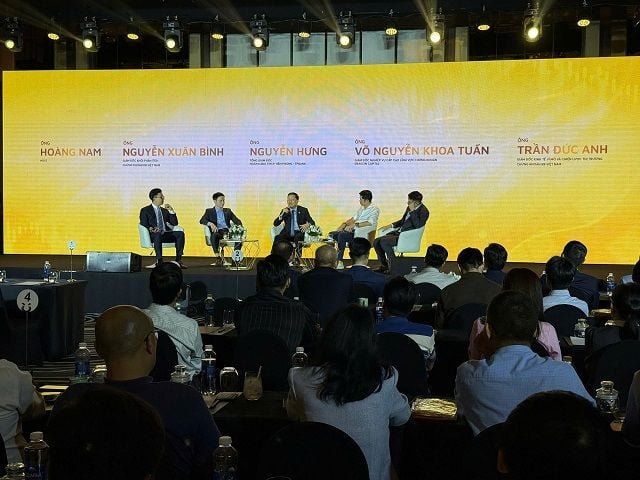
TPBank’s 2026 Annual General Meeting (AGM) was held on the morning of April 24 in Hanoi to present proposals for the business plan, the establishment of a subsidiary within VIFC, and the election of additional Board members for the 2023–2028 term. Discussions at the meeting focused on how AI and automation are reshaping the financial sector, with TPBank positioning itself as a digital leader. Questions centered on where automation should end and what limits should be observed to protect customer experience.
Chairman Do Minh Phú said that in an era of rapid digital disruption, human–AI interaction is a key issue. He noted that AI can improve employee productivity, but strict rules are required: employees must not delegate all tasks to AI without human oversight. He added that if a report is fully AI-generated without deep understanding, it indicates shortcomings in attitude and capability.
On automation boundaries, the Chairman said limits are also defined by emotions and customer experience. While processes can be automated, customer experience cannot be “packaged” identically for everyone. He emphasized that machines and humans differ in empathy, personalization, and emotional connection, and that TPBank’s products are designed to resonate with individual customers—meaning relationships and customer interactions cannot be fully automated. He warned that excessive automation could erode the bank’s core identity.
CEO Nguyen Hung discussed talent dynamics, citing last year’s indirect headcount reduction of about 500 due to automation, while total staff declined by only about 100 because approximately 400 frontline positions were added to drive revenue. He said TPBank is shifting toward more direct roles, particularly in IT, data, and AI, and continues to recruit top talent.
The bank invests about VND 1,000 billion annually in technology and development. TPBank also collaborates with leading universities through “order-based” programs and participates in seminars and forums to attract talent.
While technology and data can be copied or acquired, the Chairman said the most valuable asset over the next 5–10 years is customer trust. He noted that physical assets such as systems and infrastructure are necessary, but the irreplaceable asset is customer trust, which supports banking profitability. TPBank serves around 17 million customers, and the bank said loyalty remains high, with trust safeguarded by the entire organization.
TPBank said revenue growth from fees and services has become a strategic priority as credit growth tightens. The bank highlighted the efficiency of wholesale banking and guarantees, supported by a low-cost digital channel. It also referenced a Zero Fee policy for basic transfers for a broad customer base, while stating that the large customer base enables meaningful fee income from value-added services.
The bank added that diversification remains important. Historically, part of revenue came from trading financial instruments (bonds), but this segment has cooled recently, so TPBank continues to rely on core services and non-interest income to support profitability.
With total assets projected to reach around VND 500–600 trillion, TPBank outlined key levers to sustain high margins: (1) optimize funding costs by increasing CASA deposits above 20%, (2) diversify revenue by expanding fee income and FX, (3) actively manage asset quality to minimize loan losses, and (4) optimize operating costs through deep technology to improve productivity and reduce the cost-to-income ratio.
Although 2025 was described as volatile globally and domestically, TPBank said it delivered solid results, supported by strong risk management and high service quality. The Chairman said governance discipline is the “compass” for navigating volatility, built on three pillars: resource governance (human, physical, and financial), capital allocation with regulatory room (including credit growth appetite set by regulators), and data as a strategic asset governed by “Right – Enough – Clean – Live – Share – Safe.”
Leadership and control functions, together with the Board and executive management, were described as supported by nearly 8,000 employees.
The meeting highlighted plans to expand TPBank’s strategic ecosystem, including an ambitious move to build a comprehensive financial ecosystem with three subsidiaries: TPS (Securities), AMC (Debt Management and Asset Recovery), and a Fund Management arm. The 2025–2026 plan focuses on maximizing synergy, with the parent bank providing support to enable subsidiaries to leverage their internal capabilities.
Data governance was also emphasized, including a commitment to data standards covering accuracy, sufficiency, cleanliness, timeliness, shareability, and security.
Profitability targets for 2026 were set at VND 10,300 billion for consolidated pre-tax profit (up 12% year-on-year) and VND 10,000 billion for standalone pre-tax profit (up 10%). Loan growth is targeted at 15% to reach VND 360,000 billion, deposits at 16% to reach VND 391,000 billion, and total assets at VND 600,000 billion (up 19%), with the non-performing loan ratio kept under 2.5%.
The AGM also recognized potential headwinds in 2026, including tighter credit conditions in real estate and elevated risk of fraud as technology use grows. The Board authorized management to adjust 2026 targets as needed to reflect macro conditions and market realities.
Dividend and capital plans were approved. For 2025, TPBank reported pre-tax profit of VND 9,102 billion, including VND 5,886 billion of distributable profit. The bank plans a 5% cash dividend (per share) and two capital-raising options for 2026: (1) issue up to 416 million common shares for a 15% dividend to existing shareholders, funded from undistributed profits; and (2) issue 100 million ESOP shares (3.13%), funded up to VND 1,000 billion.
TPBank also proposed establishing a wholly owned subsidiary at the Vietnam International Finance Centre (VIFC) with charter capital of VND 3,000 billion, based in Ho Chi Minh City. The VIFC subsidiary is expected to operate under an Intelligent Banking model, focusing on digital financial infrastructure, cross-border payments, trade finance, supply chains, tokenized assets, and international debt and capital markets. Initial emphasis will be placed on international payments and fintech–bank–market connections before expanding to broader digital finance ecosystems.
In addition, the bank planned a non-life insurance venture with a minimum charter capital of VND 400 billion, targeting majority or full ownership to enhance competitive advantages and shareholder value.
The AGM approved the appointment of two new Board members to replace a resigning director and to add an independent director. As a result, the Board will have six members, including two independent directors.
All proposed items were endorsed at the meeting.







Premium gym chains are entering a “golden era” that is ending or already in decline, as rising operating costs collide with shifting consumer preferences toward more flexible, community-based ways to exercise. Long-term memberships are shrinking, margins are pressured by higher rents and facility expenses, and competition from smaller, more personalized…




