•
•
•
•
•
•
•
•
•
•
•
•
•
•
•
•
•
•
•
•
•
•
•
•
•
•
•
•
•
•
•
•
•


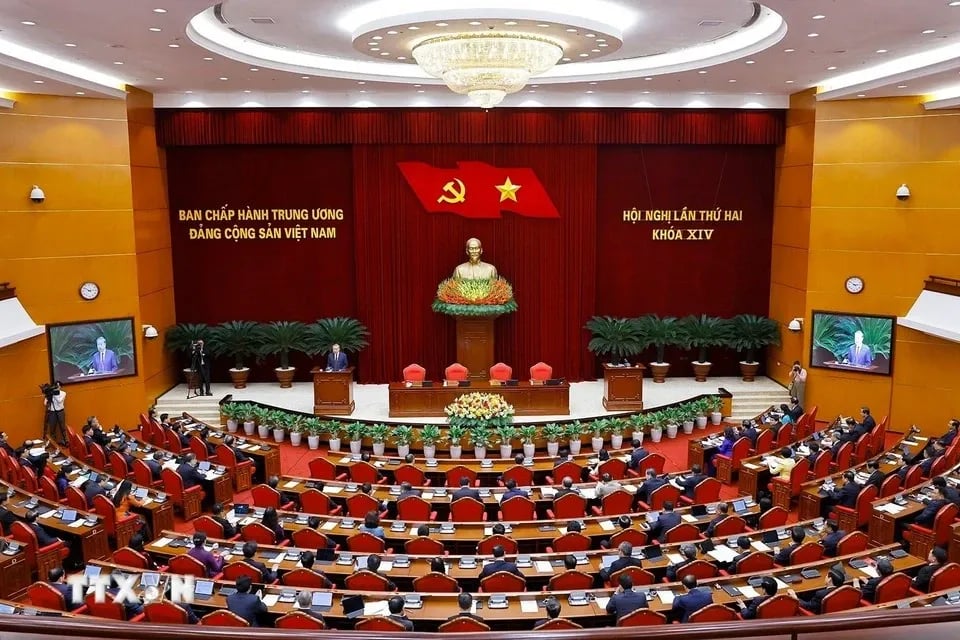
The Politburo’s leadership called on all party cells, party organizations, leaders, officials, and party members to fully understand the importance and the strategic, urgent requirement to implement the growth target of two digits in tandem with macroeconomic stability; to formalize this as a political task with concrete programs, plans, duties, outcomes, and deliverables. On April 2, General Secretary To Lâm signed the Conclusion of the Second Session of the 14th Central Committee on the plan for socio-economic development, the national finance framework, debt management, and the mid-term public investment plan 2026–2030 linked to the growth target of two digits. Aiming for GDP growth of 10% per year on average or higher. The conclusion notes that entering 2026–2030, the global environment remains highly volatile, strong, and unpredictable, affecting the goals of socio-economic development. Based on a comprehensive assessment of opportunities and challenges and with high determination, the Central Committee’s leadership unified its view to: ensure the comprehensive, direct leadership of the Party; promote the state’s constructive role; supervise and provide feedback via the Fatherland Front; and mobilize the effort and unity of the entire political system, the business community, and every citizen. The resolve is to implement the resolutions of the 14th Party Congress and the central resolutions, and to strive for growth of two digits linked with macro stability, inflation control, and major macroeconomic balances; to maintain resolute, effective action; to assess the situation and flexibly apply solutions to overcome difficulties in 2026 and to break out in 2027–2030. To accelerate the building of a coherent institutional framework that creates and sustains development, to promptly remove bottlenecks; to mobilize, unlock, and rapidly unleash all resources; to develop a new generation of productive forces. On targets and indicators, the conclusion emphasizes rapid and sustainable development; to strive for GDP growth of 10% per year or higher while maintaining macro stability, controlling inflation, and ensuring major balances; to improve and raise living standards; by 2030 to become a developing country with modern industry, a higher-middle income level, and among the world’s top 30 economies by GDP. Growth model transformation is mandatory. The conclusion highlights tasks and solutions, including continuing to implement resolutely the 14th Party Congress resolutions and other central resolutions; for 2026–2030, unify thinking, awareness, aspirations, and actions; reform governance to realize two-digit growth. All levels of party committees, organizations, leaders, and officials must recognize the importance and strategic, urgent requirements to achieve two-digit growth linked with macro stability; translate this into annual programs with clear duties, results, and deliverables by sector, agency, and locality; strengthen inspection, supervision, and evaluation based on performance criteria; amplify propaganda and role modeling to reinforce confidence and aspirations for development among the business community and the people. The conclusion calls for completing a cohesive, modern, and competitive development regime; promptly remove institutional and policy bottlenecks; review, amend, and finalize the legal framework related to the digital economy, investment and business, especially in land, planning, trade, minerals, and construction; contributing to removing obstacles and promoting production and business; aim to position Vietnam among the top three ASEAN investment destinations and among the world’s top 30 economies by 2028. In addition, the growth model must be transformed; push for industrial restructuring; develop new corporate sectors and economic models; promote growth in tandem with macro stability, inflation control, and major balances; diversify supply chains and financing channels; prioritize science, technology, innovation, and digital transformation; modernize the national education system, attract and recruit talent; develop coherent and modern infrastructure; promote urbanization and regional linkage. Capital allocation must focus resources centrally, not spread thin; financial management must be efficient with the central budget leading, revenue quality improved, bases widened, and public finances sustainable; cut routine expenditures, especially for conferences, seminars, and travel. Build a modern, transparent tax system that promotes growth while ensuring revenue; maintain tax system neutrality; manage post-tax profits of state-owned enterprises to support development without materially harming public revenue. Debt management: effectively implement the Public Debt Management Law, strengthen debt risk management, increase transparency in borrowing, use, and reporting; strive to raise Vietnam’s sovereign credit rating; proactively manage borrowing instruments, maturities, and volumes within the year, coordinating with treasury operations to reduce costs and ensure liquidity of Government Bonds. For mid-term public investment, central budget allocations should follow the Law on Public Investment; prioritize national target programs, key national projects already decided by the National Assembly, defense and security tasks, and interregional projects; keep a 10% contingency for 2026–2030; reduce the number of projects by at least 30% versus 2021–2025. Local budgets should determine investments according to plans and resource balance; ensure optimal support for economic and social development, defense and security; adhere to the principle of capital concentration, not dispersion; prioritize interregional and cross-provincial projects with significant development impact. Read more







Premium gym chains are entering a “golden era” that is ending or already in decline, as rising operating costs collide with shifting consumer preferences toward more flexible, community-based ways to exercise. Long-term memberships are shrinking, margins are pressured by higher rents and facility expenses, and competition from smaller, more personalized…




