•
•
•
•
•
•
•
•
•
•
•
•
•
•
•
•
•
•
•
•
•
•
•
•
•
•
•
•
•
•
•
•
•


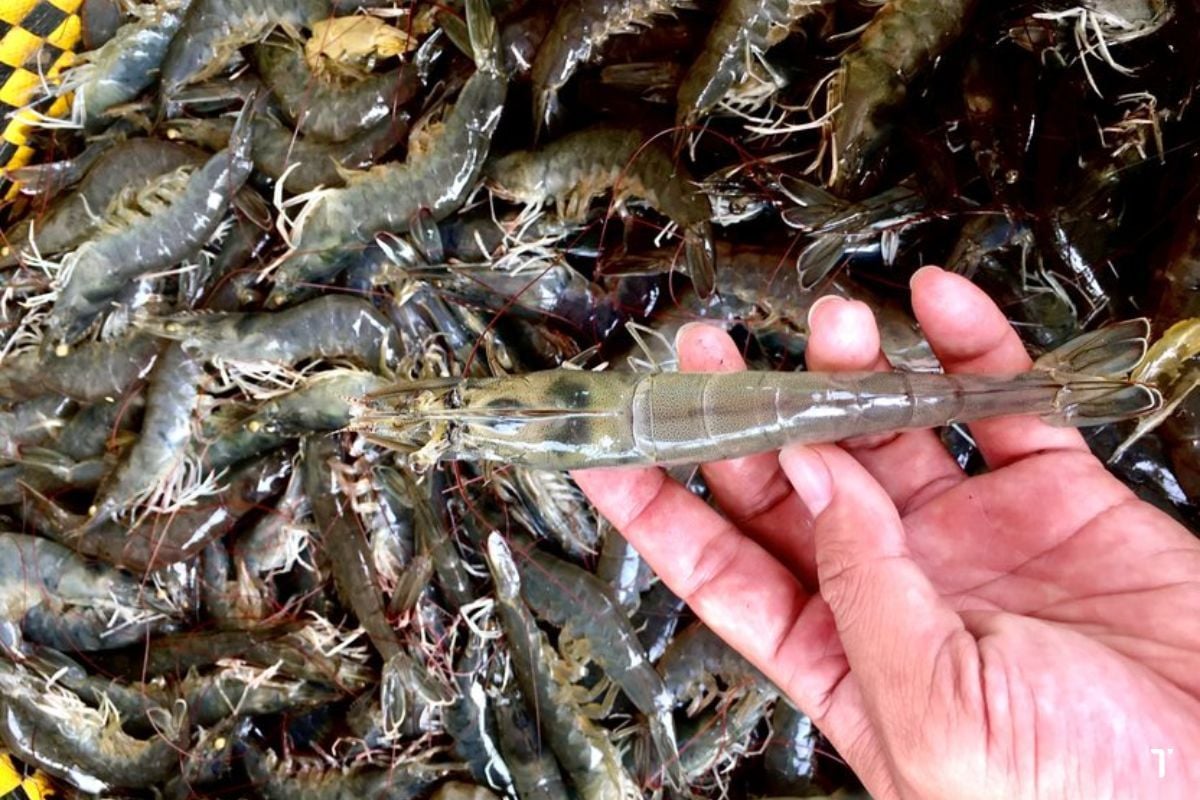
Vietnam's mastery of this technology has helped Vietnam's whiteleg shrimp survive well in low-salinity water. The research is: 'Perfecting and testing the Biofloc - biofiltration (BioRAS) process to raise whiteleg shrimp in low-salinity environments' implemented by the Institute of Marine Resources and Environment (now the Institute of Energy and Environment Science and Technology, under the Vietnam Academy of Science and Technology). According to Vietnam's Customs data for 2025, the whiteleg shrimp export industry remains a pillar with USD 2.98 billion in export value, accounting for 64.6% of total export turnover, up 9.6%. In the context of farming whiteleg shrimp in low-salinity waters facing many constraints, a study by Dr. Do Manh Hao and colleagues has shown a new approach: integrating biofloc technology with a recirculating filtration system (RAS) to stabilize the water environment while simultaneously generating natural feed within the rearing tank. The experimental results show survival rates above 85% and yields of about 2.5 kg/m3 per cycle – noteworthy figures under on-farm conditions. The core point of BioRAS is not a simple mechanical sum of the two technologies, but a redesign of the entire system so that the recirculating filtration and biofloc support each other, forming a stable farming ecosystem. From the technology mismatch to a practical problem. Globally, Recirculating Aquaculture Systems (RAS) are highly regarded for water savings, environmental control and disease reduction. However, when applied to Vietnam's conditions, especially in low-salinity farming, the model shows limitations. Nutrient-poor water and a deficiency of beneficial microbiota hamper shrimp growth, while whiteleg shrimp biology requires a source of organic matter as feed supplement. This mismatch creates a dual requirement: strict water environment control while providing natural nutrients. BioRAS was developed to address this by leveraging waste from the tanks to form biofloc particles – a feed rich in microorganisms for shrimp. Building on prior research (RAS trials in Hai Phong since 2018), the team continued to develop BioRAS and test it in low-salinity conditions (2–5‰). Groundwater after sand filtration, neutral pH, with no heavy metal contamination or dangerous microbes detected. The technical process has been optimized to adapt to low-salinity environments. Fry are gradually acclimatized by reducing salinity (1‰ steps over about 24 hours), improving survival rates. Simultaneously, the biofloc biological filter is activated to process nitrogen-containing compounds, while biofloc is formed in the culture tank. Not only an experiment, but aiming at practical production. According to Dr. Do Manh Hao, the greatest value of BioRAS lies not in lab numbers but in its stable operation and scalability under production conditions. The project aims to build a process that can be directly transferred to enterprises and farmers. In practice, global models combining RAS and biofloc usually apply to saltwater or brackish water, with high capital costs. BioRAS, by contrast, is adjusted to suit Vietnam's conditions: limited water supply, low salinity, high disease-control requirements but cost remains reasonable. BioRAS shows potential to effectively exploit inland and saline-affected lands – areas unsuitable for traditional crops. By avoiding water changes and reducing effluent, the model also reduces environmental pressure and disease risk. Notably, the biofloc produced during the microbial process in the tank not only treats waste but also becomes a natural feed, helping reduce feed costs and improve farming performance. The project has published two international SCIE-listed papers, one domestic paper, and one patent has been granted; with the technical process and system design ready for transfer. If scaled up, BioRAS can not only improve economic efficiency for farmers but also open a sustainable development path for the Vietnamese shrimp industry amid climate change and dwindling water resources.

Premium gym chains are entering a “golden era” that is ending or already in decline, as rising operating costs collide with shifting consumer preferences toward more flexible, community-based ways to exercise. Long-term memberships are shrinking, margins are pressured by higher rents and facility expenses, and competition from smaller, more personalized…