•
•
•
•
•
•
•
•
•
•
•
•
•
•
•
•
•
•
•
•
•
•
•
•
•
•
•
•
•
•
•
•
•
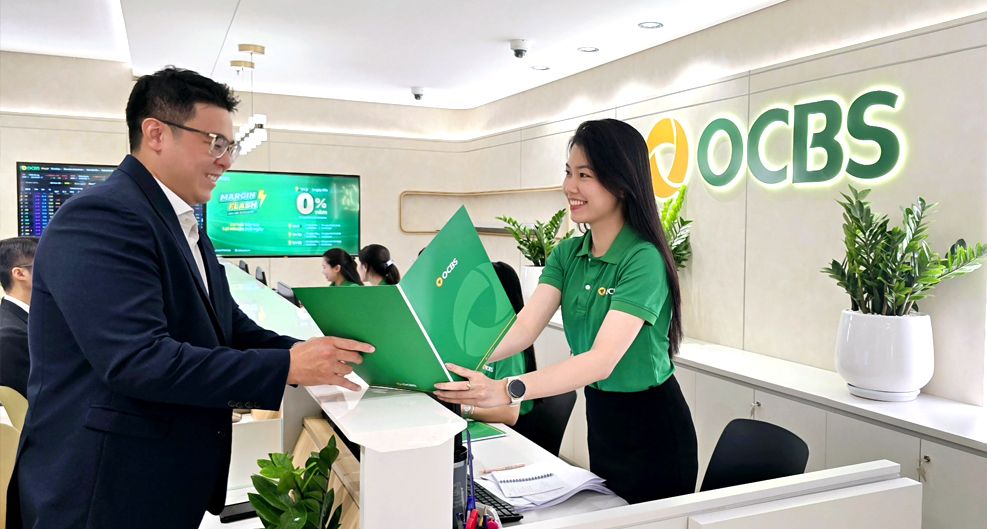
OCBS Joint Stock Securities Company (OCBS) has announced the results of a 200 million-share offering to existing shareholders aimed at increasing its charter capital.
The rights exercise ratio was 120:200, meaning shareholders holding 120 shares could subscribe for 200 additional shares.
On 3 April, OCBS completed the allocation of 151.3 million shares to seven shareholders, equivalent to 75.66% of the total registered offering. The remaining 48.6 million shares will be canceled due to market conditions and investor demand.
The expected share delivery date was May 3, 2026.
With an offering price of VND 10,000 per share, OCBS raised VND 1.513 trillion. The company increased its charter capital from VND 1,200 billion to VND 2,713 billion.
After the offering, OCBS will have a total of 66 shareholders. This includes 63 domestic holders with 271.19 million shares and three foreign individual shareholders holding 130,000 shares.
One major shareholder holds 96.62% of the capital.
OCBS stated that the capital increase was approved by a written resolution on 29 March, issued in November 2025. The 2026 annual general meeting (AGM) will be held at The Hallmark Building, 15 Tran Bach Dang Street, An Khanh Ward, Ho Chi Minh City; the time has not been announced.
In 2025, OCBS recorded operating revenue of nearly VND 275 billion, up 4.8 times from 2024. Operating expenses were VND 61 billion, up 2.5 times. Pre-tax profit reached VND 145 billion, up 8.5 times, while net profit surpassed VND 132 billion, about 10 times the 2024 level.
For 2025, OCBS set a business plan at the highest level in 16 years, targeting revenue of VND 194 billion and after-tax profit of VND 70 billion—up 3.3 times and more than 5 times, respectively, versus 2024 results. The company said it exceeded both revenue and profit targets.
Bitcoin (BTC) investors who use steady dollar-cost averaging (DCA) may be underperforming versus strategies that adjust exposure to the market’s cycle, according to new research arguing that Bitcoin’s behavior differs from traditional long-duration assets.
In a report cited by Markus Thielen of 10x Research, Bitcoin’s market…