•
•
•
•
•
•
•
•
•
•
•
•
•
•
•
•
•
•
•
•
•
•
•
•
•
•
•
•
•
•
•
•
•


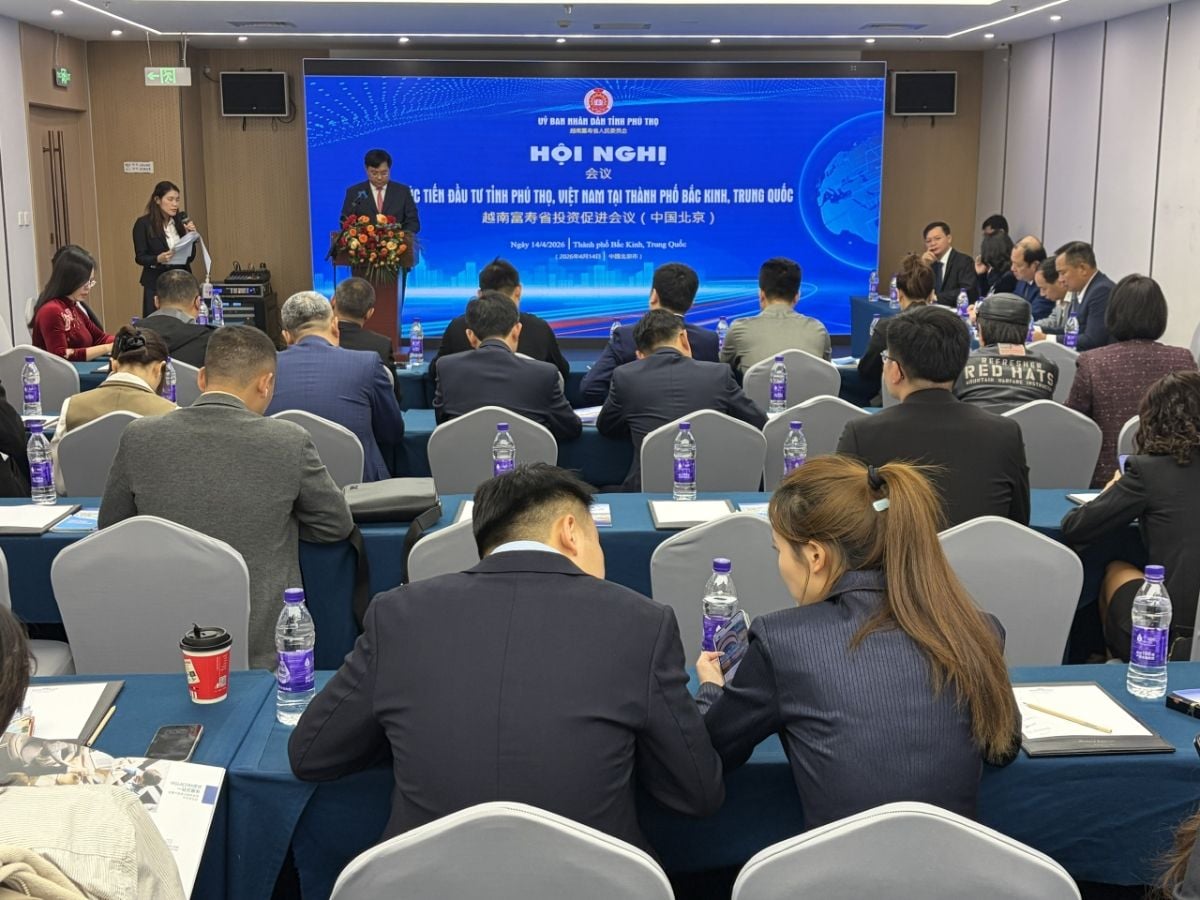
Phu Tho Province is expanding opportunities to attract investment from Chinese companies with strengths in technology, clean energy, transportation infrastructure, retail and tourism.
On 14 April 2026, in Beijing, Phu Tho organized an investment promotion conference to attract Chinese enterprises in semiconductors, electronic components, data centers, artificial intelligence, transport infrastructure, high-tech agriculture, finance and tourism, and the transfer of green-energy technology.
Speaking at the conference, Tran Duy Dong, Chairman of the Provincial People’s Committee, said the Beijing event aims to strengthen promotion, exchange and cooperation, and connect investment, trade and tourism between the province and Chinese partners.
“This is a testament to the strong commitment of Phu Tho to actively integrate into globalization, accompany sustainable development trends and global innovation,” he emphasized.
Since the merger of Phu Tho, Vinh Phuc and Hoa Binh into one province, the locality has expanded its development space to a population of more than 4 million and a GRDP of 16 billion USD.
Phu Tho’s transport system includes 31,000 km of roads, alongside a water- and rail-based network closely linked with the capital region and international border gates. The province is positioning itself as a strategic transshipment hub, particularly attractive to major partners such as China, which has invested nearly USD 3.5 billion in Phu Tho.
In 2025, Phu Tho’s GRDP reached USD 16 billion, ranking sixth nationwide. Economic growth was 10.52%, ranking fourth nationwide and the highest in the Northern midland and mountainous region.
According to the chairman, attracting investment is a key task to drive economic development. Phu Tho has said it has continuously improved the investment climate by offering incentives to investors in accordance with the law, reforming administrative procedures, and implementing investor-friendly policies.
Measures cited include quarterly enterprise dialogue conferences and regular collection and resolution of investors’ difficulties to promptly address obstacles for businesses operating in the province.
To prepare conditions for investment attraction, Phu Tho said it is upgrading and synchronizing transport and technical infrastructure and has established 28 industrial zones with land use of more than 5,800 hectares. The province also reported that industrial zones planned through 2050 total 58, with land use of more than 14,000 hectares, with many zones having built or upgrading infrastructure to receive large-scale and high-tech projects.
“With the potential and strengths of Chinese investors, especially in the fields of technology, clean energy, transport infrastructure, urban development, retail and tourism,” Chairman Tran Duy Dong said, “Phu Tho hopes to broaden investment opportunities with enterprises in these sectors.”
Phu Tho’s Investment Promotion and Enterprise Support Center reported that in 2025, foreign direct investment (FDI) in Phu Tho reached USD 1.51 billion, while domestic investment (DDI) reached about USD 10 billion.
In the first three months of the year, the province attracted 37 newly licensed FDI projects and amendments with total registered capital of USD 704 million, up 7.06 times from the same period. Domestic capital recorded 28 projects with total investment of VND 12,532 billion, up more than 5 times.
In the distribution of FDI, the Vinh Phuc area leads with USD 318 million, followed by Phu Tho with USD 233.5 million and Hoa Binh with USD 152.5 million. The province also said foreign capital is concentrated 99.89% in the processing and manufacturing sector.
Caption: Chairman of Phu Tho Province, Tran Duy Dong, speaks at the conference.




Premium gym chains are entering a “golden era” that is ending or already in decline, as rising operating costs collide with shifting consumer preferences toward more flexible, community-based ways to exercise. Long-term memberships are shrinking, margins are pressured by higher rents and facility expenses, and competition from smaller, more personalized…




