•
•
•
•
•
•
•
•
•
•
•
•
•
•
•
•
•
•
•
•
•
•
•
•
•
•
•
•
•
•
•
•
•


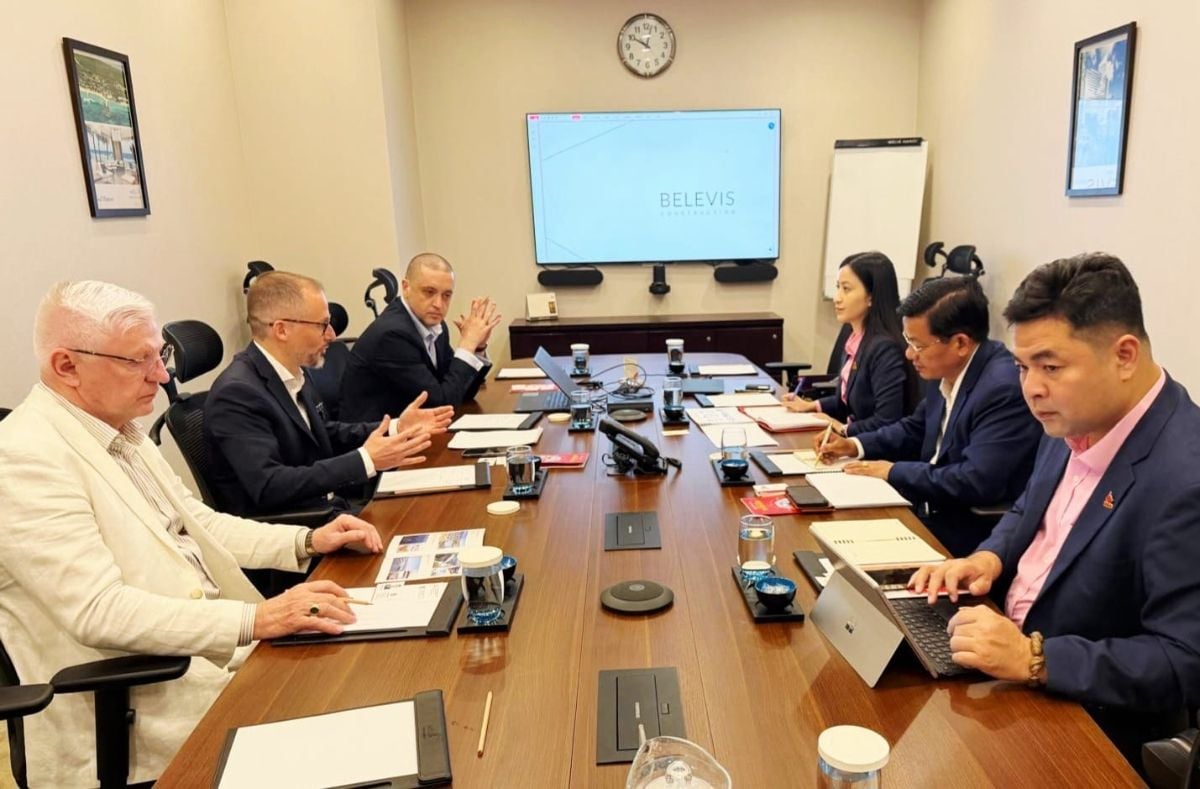
Belevis Construction S.R.O (Slovakia) and Đại Dũng Group (Vietnam) have officially joined forces to develop a large-scale industrial ecosystem in Slovakia, aiming to strengthen economic and industrial cooperation between Vietnam and Slovakia. Mr. Martin Repik, Chairman and Chief Executive of Belevis Construction S.R.O, shared details of the partnership with Vietnam Economy Magazine / VnEconomy, alongside his team including Tomas Jabornik (Commercial Director) and Tibor Bucek (Senior International Advisor).
From a Slovak business perspective, Vietnam is described as having strong momentum for industrial development and rapid growth. The country is characterized as a market with abundant potential for enterprises seeking to build new, large-scale projects with a long-term outlook. With a population of over 100 million, Vietnam is also presented as a very large market in Southeast Asia.
The article also highlights historical ties between Vietnam and Slovakia, including education, culture, and labor cooperation. It notes that when Slovakia was part of Czechoslovakia, many Vietnamese students studied there, creating a shared foundation in people, education, and labor cooperation.
In addition, the Vietnam–European Union Free Trade Agreement (EVFTA) is cited as a key factor supporting business expansion, as it has been in force for several years.
Belevis Construction S.R.O recently signed a Memorandum of Understanding (MoU) with Đại Dũng Group to develop a large-scale industrial ecosystem in Europe, while strengthening economic-industrial cooperation between Vietnam and Slovakia. The cooperation is presented as being driven by Đại Dũng’s reputation and technical capacity, particularly in steel structures.
The article states that Đại Dũng is a family-run business operating under a family-oriented model, which it says helps create a cohesive and efficient working environment. It also notes that the group is rapidly expanding and focuses on green development, aligning with increasingly stringent European standards.
Under the Vietnam–Slovakia Business Forum, Belevis Construction S.R.O signed an MoU with Đại Dũng to develop a large-scale industrial ecosystem in Slovakia. The signing took place with Vietnam’s Prime Minister Le Minh Hung and Slovakia’s Prime Minister Robert Fico in attendance.
The project is described as located in central Slovakia near the High Tatras National Park, requiring strict adherence to environmental principles. As a result, the project is expected to focus on areas such as R&D, technology, logistics, or light manufacturing, with the goal of zero emissions or carbon neutrality.
The industrial park is also described as a green project prepared with the necessary legal framework and permits, supported by local authorities and the government. Belevis said it views the project as a first step for the partnership and expects it to move toward implementation soon.
When asked about challenges Vietnam faces in developing green industrial parks, the response frames it less as a challenge and more as a mandatory condition: if green standards are not met, such projects cannot be implemented.
Belevis said it believes Đại Dũng is prepared to meet these requirements, citing the group’s experience and diversified project portfolio, as well as its focus on creating value for the community. On Belevis’s side, it said it can support Đại Dũng in Slovakia in legal matters, project development, and construction.
The article also emphasizes that the industrial park project could serve as a starting point for other Vietnamese firms to enter the European market through Slovakia. It says Đại Dũng could act as a pioneer, helping create momentum for additional Vietnamese enterprises to participate.
In this view, the industrial park is not only a single project but could become a gateway for Vietnamese companies across products, services, and technology to penetrate the European market. The article points to Slovakia’s strategic location and economic efficiency, including its central position in the European Union and use of the euro.
It also cites Slovakia’s connectivity infrastructure, including railways and highways, and proximity to international airports. Looking ahead, Slovakia is described as potentially able to connect with Ukraine when conditions stabilize, which could open additional opportunities.
Regarding further development and expansion plans, Belevis said two main directions are evident. First is a partnership in the European Union through a joint venture model. Second is investment and cooperation inside Vietnam, meaning the company is pursuing two simultaneous streams: cooperation with Đại Dũng in Europe and development of Belevis’s operations in Vietnam.
The article states that the company will assess which market offers higher returns, stronger green features, and greater growth potential to decide where to prioritize projects.
It also contrasts experience and market scale: Vietnam is described as having a solid industrial base and large-scale project experience developed rapidly over the past 10–20 years, while individual EU country markets are often smaller. It notes that while the EU has roughly 300 million people, Vietnam accounts for nearly one third of that figure, and argues that Vietnamese firms’ experience in operating large projects is a notable advantage.
Belevis said it can bring advanced European technological and engineering solutions while emphasizing green development, positioning this combination as a foundation for a successful joint venture and long-term cooperation.
To further facilitate investment by Belevis and other Slovak firms, the article highlights the importance of business forums connecting Slovak and Vietnamese enterprises. It calls for more business forums and stronger networks between the two countries, noting that the geographical distance between Vietnam and the European Union is substantial.
It also recommends more frequent exchanges and direct interactions, stating that Vietnamese firms are open and ready to cooperate with Slovak partners and that increased communication can shorten the distance.
Finally, the article suggests organizing business meetings in both Slovakia and Vietnamese cities on a regular basis—monthly or every six months—arguing that direct meetings often carry more value than simply hearing about companies without in-person engagement.





Premium gym chains are entering a “golden era” that is ending or already in decline, as rising operating costs collide with shifting consumer preferences toward more flexible, community-based ways to exercise. Long-term memberships are shrinking, margins are pressured by higher rents and facility expenses, and competition from smaller, more personalized…




