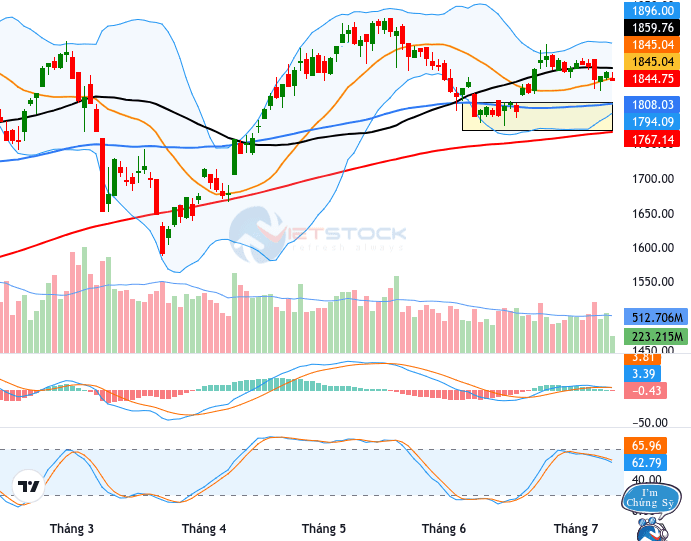
The S&P 500 and Nasdaq Composite rose to new highs on April 15 as investors grew optimistic about the potential end of the Middle East conflict. At the close on April 15, the Dow Jones Industrial Average fell slightly 0.15%, while the other two main Wall Street indices rose. The S&P 500 increased 0.8% to 7,022 points, surpassing the old January high. The Nasdaq Composite rose 1.6% to 24,016, a record intraday high; this tech-heavy index has risen more than 15% since the end of March. The market moved higher as investors grew more optimistic about a potential US-Iran ceasefire, though the situation remained fragile. In an interview on Fox Business, U.S. President Donald Trump said the conflict 'is nearing its end' and that Iran 'very much wants to reach an agreement.' Several U.S. media outlets also reported that a second round of talks between Washington and Tehran is under discussion. A drop in global crude oil prices toward around $90 a barrel helped lift Wall Street. The United States is in earnings season, and investors are optimistic about corporate profits. The S&P 500 has gained in 10 of the last 11 sessions, with a total rise of more than 10%. Since the start of the conflict, the index is up about 2%. The Nasdaq has also posted 11 straight sessions of gains, rising about 6% since the start of the conflict. The S&P 500's recovery is shaping a V-shaped pattern. Last week, the Dow posted its strongest weekly gain in a year. Since the start of the month, the Dow has risen 5%. Since the start of the conflict, the Dow is down 1%. Craig Johnson, market strategist at Piper Sandler, said the rally in U.S.
stocks appears to be driven by hope, noting that oil prices remain significantly higher than before the conflict and that the duration of the conflict remains uncertain. Gold prices rose on the morning of April 16 after a nearly $50 drop the prior session, with bullion up more than $40 to around $4,832 per ounce. Gold could benefit if inflation pressures ease as the conflict subsides, helping central banks resume rate cuts.